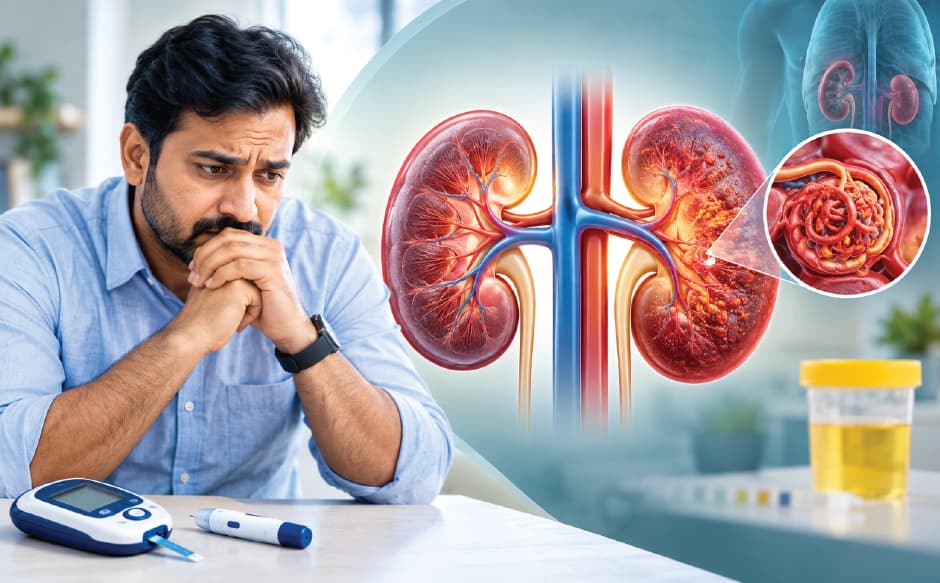

Diabetes rarely announces itself. Most people who go on to develop type 2 diabetes spend years, sometimes a decade, with blood sugar that is quietly climbing above normal, long before a fasting glucose test flags anything unusual. That silence is exactly why preventive health care, not just treatment, has become the more urgent conversation.
The good news, and the reason this guide exists, is that type 2 diabetes, which accounts for the overwhelming majority of cases, is one of the few major chronic diseases where prevention has strong clinical evidence behind it.
This article walks through what preventive health care for diabetes actually involves: how risk is assessed, what the five evidence-backed pillars of prevention look like in practice, a screening schedule by age and risk level, and where specialist care fits in when lifestyle change alone isn't enough.
What Does "Preventive Health Care for Diabetes" Actually Mean?
In clinical terms, diabetes prevention isn't a single action, it operates at three levels, and knowing which one applies to you changes what you should actually do:
-
Primary prevention: Stopping diabetes from developing in someone with no diagnosis yet, through risk screening, diet, and activity. This is the focus for most healthy adults, especially those with a family history, abdominal obesity, or a sedentary routine.
-
Secondary prevention: Catching prediabetes (impaired fasting glucose or impaired glucose tolerance) early and reversing or delaying its progression to full diabetes. This is the stage where intervention has the single biggest evidence base.
-
Tertiary prevention: For people already diagnosed, preventing complications (nerve damage, kidney disease, vision loss, heart disease) through consistent monitoring and specialist-guided management.
Most advices collapses all three into one generic "eat healthy, exercise more" message. That's not wrong, but it's incomplete, the right action depends on where you actually stand, which is why screening comes first, not last.
Know Your Risk First: Types of Diabetes and Who's Vulnerable
Understanding which type of diabetes you may be at risk for is the first step toward choosing the right screening, prevention, or management strategy:
| Type | What it is | Preventable? |
|---|---|---|
| Type 1 diabetes | Autoimmune destruction of insulin-producing cells, usually diagnosed in childhood/young adulthood | Not currently preventable; management-focused |
| Type 2 diabetes | Insulin resistance developing over years, strongly linked to lifestyle and genetics | Largely preventable/delayable |
| Prediabetes | Blood sugar above normal but below the diabetes threshold | Often reversible with early action |
| Gestational diabetes | Develops during pregnancy, raises future type 2 risk for mother and child | Risk can be lowered with monitoring and diet |
This guide focuses on type 2 diabetes and prediabetes, since that's where preventive action has the most leverage.
Non-modifiable risk factors include age (risk rises sharply after 30 in South Asian populations, earlier than in Western guidelines), family history of diabetes, and a personal history of gestational diabetes or PCOS.
Modifiable risk factors, the ones this article focuses on, include abdominal obesity, physical inactivity, a refined-carbohydrate-heavy diet, poor sleep, chronic stress, and smoking or tobacco use.
The 5 Pillars of Preventive Health Care for Diabetes
Early screening helps identify elevated blood sugar and other risk factors before diabetes progresses, using a combination of simple clinical assessments and blood tests.
Pillar 1: Risk Screening and Early Detection
Prevention starts with knowing your number, not guessing. The tools used include:
-
Indian Diabetes Risk Score (IDRS): A quick questionnaire-based score (age, waist circumference, family history, physical activity) used widely in Indian screening camps and by the ICMR-INDIAB study to flag high-risk individuals.
-
Fasting Plasma Glucose (FPG): 100–125 mg/dL indicates prediabetes; 126 mg/dL or above (on repeat testing) indicates diabetes.
-
HbA1c: Reflects average blood sugar over 2–3 months; 5.7–6.4% is prediabetes, 6.5% or above is diabetes.
-
Oral Glucose Tolerance Test (OGTT): The most sensitive test, often used to confirm borderline results or during pregnancy screening.
If you're over 30, carry extra weight around the abdomen, or have a parent or sibling with diabetes, an annual FPG or HbA1c check is a reasonable baseline, not something to wait on until symptoms like excessive thirst or fatigue appear.
Pillar 2: Nutrition With a Realistic Kerala-Diet Lens
Generic "eat healthy" advice rarely accounts for how people in Kerala actually eat. A few practical, evidence-informed adjustments matter more than an imported diet plan:
-
Rice portion, not rice elimination. Rice is a staple, not the enemy, the issue is portion size and pairing. Replacing a portion of polished white rice with red rice/matta rice or adding a protein and vegetable side slows the glucose spike considerably.
-
Coconut oil in moderation, not fear. Traditional Kerala cooking oils aren't the primary driver of diabetes risk; overall calorie density, fried snacking frequency (banana chips, parippu vada), and sugary tea/coffee intake matter more day to day.
-
Fibre first. Vegetables, leafy greens (cheera, chena leaves), and legumes eaten before or with carbohydrates blunt post-meal glucose spikes — a simple, low-cost change with outsized impact.
-
Sugary beverages are the easiest win. Cutting down on sweetened tea, coffee, and packaged juices is often the single most impactful, least disruptive change most people can make.
Pillar 3: Physical Activity
The clinical benchmark used in most major prevention trials, including the landmark U.S. Diabetes Prevention Program discussed below, is 150 minutes of moderate-intensity activity per week, roughly 30 minutes on five days. It doesn't have to mean a gym membership: brisk walking, cycling, swimming, or even structured housework at a sustained pace counts. Consistency across the week matters more than intensity in any single session.
Pillar 4: Weight and Waist Management
Because South Asians accumulate visceral (abdominal) fat at lower body weights, waist circumference is often a more useful marker than BMI alone. Commonly used Asian-Indian cut-offs flag increased risk above roughly 90 cm (35.4 in) in men and 80 cm (31.5 in) in women, noticeably lower than the thresholds used in Western guidelines. Even a modest weight loss, the DPP trial used a 7% body-weight target, has outsized benefit on insulin sensitivity.
Pillar 5: Sleep, Stress, and Mental Health
This is the pillar most diabetes-prevention content skips entirely, despite a growing body of evidence linking poor sleep quality and chronic stress to insulin resistance via cortisol and disrupted hunger-hormone regulation. Practically, this means treating consistent sleep timing and stress management (even simple breathing practices or a wind-down routine) as part of a prevention plan — not an afterthought to diet and exercise.
Does Prevention Actually Work? What the Evidence Shows
This isn't a hypothetical. The U.S. Diabetes Prevention Program (DPP), a landmark NIH-funded randomised controlled trial of over 3,200 adults with prediabetes, found that an intensive lifestyle intervention (7% weight loss plus 150 minutes/week of activity) reduced the incidence of type 2 diabetes by 58% over an average follow-up of 2.8 years, outperforming metformin, which reduced risk by 31%.
The effect held across every age, sex, and ethnic group studied. The takeaway for readers: prevention isn't a vague wellness idea. It's one of the more evidence-backed interventions in modern chronic-disease medicine.


A Preventive Screening Schedule by Age and Risk Level
Screening frequency should be based not only on age but also on individual risk factors and whether prediabetes or diabetes has already been diagnosed.
| Age / Risk Group | Recommended Screening | Frequency |
|---|---|---|
| Adults 30+, no known risk factors | FPG or HbA1c | Every 3 years |
| Adults 30+ with obesity, family history, or high IDRS score | FPG/HbA1c, lipid profile, blood pressure | Annually |
| Prediabetes diagnosed | HbA1c, weight/waist tracking | Every 6 months |
| Pregnant women | OGTT (gestational diabetes screening) | 24–28 weeks gestation, or earlier if high-risk |
| Diagnosed type 2 diabetes | HbA1c, kidney function, eye exam, foot exam | Every 3 months (HbA1c); annual (eye/kidney/foot) |
Common Myths About Diabetes Prevention, Corrected
Several common beliefs about diabetes prevention can lead to unnecessary restrictions or a false sense of security. Here are four myths worth correcting:
1. "Only overweight people get diabetes."
Not accurate for South Asians specifically, the "thin-fat Indian" phenotype means people with a normal BMI but higher visceral fat and lower muscle mass are still at meaningful risk. Waist circumference matters more than the number on the scale.
2. "If it doesn't run in my family, I'm safe."
Family history raises risk, but the majority of new type 2 diabetes cases still occur in people without a strong family history, lifestyle factors are independently significant.
3. "Diabetes prevention means giving up rice completely."
As covered above, portion and pairing matter more than elimination for most people.
4. "Prediabetes isn't a real diagnosis, just a warning."
Prediabetes is a distinct clinical stage with its own management guidance — and the evidence above shows it's also the stage where intervention works best.
How Meitra Hospital Supports Preventive Diabetes Care in Kozhikode
Meitra Hospital’s Centre for Endocrinology and Metabolic Disease in Kozhikode takes an individualised approach to diabetes prevention and risk assessment. Rather than following a single protocol for every patient, the team considers factors such as blood sugar levels, family history, weight, lifestyle, and other metabolic risks when planning screening and preventive care.
Key aspects of the approach include:
-
Individualised risk assessment: Screening and follow-up are tailored according to the patient’s risk factors and existing health profile.
-
Specialist endocrinology care: Consultants including Dr. Naseer Ali (DM Endocrinology, AIIMS New Delhi) and Dr. Altaf Ali Naushad (DM Endocrinology, M.S. Ramaiah Medical College) provide specialist evaluation and management.
-
Nutrition support: The Centre works alongside Meitra’s Department of Clinical Nutrition and Dietetics to incorporate practical dietary changes into diabetes prevention plans.
-
Regionally relevant guidance: Dietary counselling can take into account common Kerala eating patterns, including rice-based meals, coconut-based preparations, and fish, making recommendations more practical to follow.
-
Early intervention: Patients with prediabetes or elevated diabetes risk can receive guidance on lifestyle changes and monitoring before blood sugar abnormalities progress.
This combination of risk assessment, endocrinology expertise, and personalised nutrition support allows preventive diabetes care to focus not only on test results, but also on sustainable changes that patients can realistically maintain.
Why Patients From Across India and Abroad Choose Meitra Hospital
Beyond endocrinology, Meitra Hospital has developed into a multispecialty centre serving patients from across Kerala, other parts of India, and international destinations, including Gulf and NRI communities. For patients managing diabetes, this broader clinical setup can be particularly useful because diabetes may require monitoring across multiple organ systems over time.
Some of the factors patients may consider when choosing Meitra include:
-
Accredited hospital infrastructure: Meitra holds JCI, NABH, and NABL accreditations, providing recognised quality and laboratory standards.
-
Multidisciplinary specialist support: Diabetes-related concerns can involve the heart, kidneys, eyes, nerves, and other systems. Access to specialties such as cardiology, nephrology, and ophthalmology can help coordinate evaluation when complications or additional risk factors arise.
-
Integrated Centres of Excellence: Services including the Centre for Heart & Vascular Care and **Centre for Nephro-Urosciences are available within the same hospital environment.
-
Continuity of care: Patients can receive screening, diagnostic evaluation, specialist consultation, and ongoing management within one institution when clinically appropriate.
-
Access for travelling patients: Patients from outside Kerala and international patients can coordinate consultations and investigations during their visit, depending on their treatment requirements.
For patients travelling from other states or countries, the combination of accredited infrastructure, multidisciplinary expertise, diagnostic facilities, and comparatively competitive healthcare costs can make Meitra a practical option for diabetes screening and long-term care.
Ultimately, the choice of hospital should depend on the individual's medical needs, the specialists required, available facilities, and the continuity of care that can be provided.
Conclusion
Preventive health care for diabetes isn't a single lifestyle checklist, it's a layered approach that starts with knowing your actual risk (through screening, not guesswork), builds on five reinforcing pillars of diet, activity, weight management, sleep, and stress control, and is backed by real clinical evidence, from the U.S. DPP trial's 58% risk reduction to Kerala's own K-DPP research.
Given that India carries the world's second-largest diabetes burden and nearly half of affected adults in the region don't yet know they have it, the single highest-leverage action most readers can take today isn't a diet overhaul, it's booking a screening test. Everything else follows from knowing where you stand.
Not sure where your risk level stands? You don't have to figure it out alone, chat with Meitra Hospital's medical assistant to understand which screening test fits your risk profile, or book a consultation with the Centre for Endocrinology and Metabolic Disease directly.
Medical Disclaimer: This article is intended for general informational purposes only and does not constitute medical advice, diagnosis, or treatment. Diabetes risk, screening needs, and management plans vary by individual. Please consult a qualified physician or endocrinologist before making changes to your diet, exercise routine, or medication, or before acting on any information in this article.