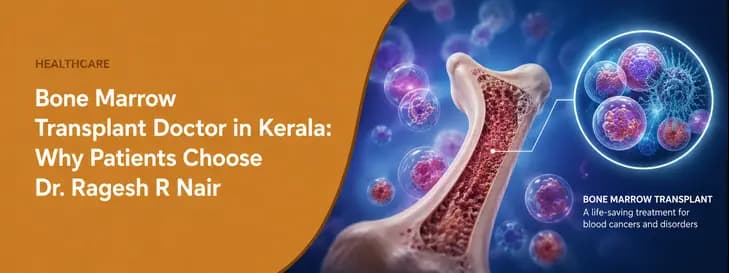

A bone marrow transplant (BMT) is a specialised and advanced treatment procedure used to replace damaged or diseased blood-forming stem cells with healthy stem cells, helping patients recover from serious conditions such as leukemia, lymphoma, aplastic anemia, and other blood disorders.
For families facing a complex diagnosis, choosing the right bone marrow transplant doctor in Kerala is a crucial decision that can significantly impact treatment outcomes.
With advancements in transplant medicine, India’s specialised centres have reported BMT success rates of around 85–90%, reflecting outcomes comparable with global standards. In Kerala, experts like Dr. Ragesh R Nair provide comprehensive transplant care with advanced approaches tailored to each patient’s needs.
What Is a Bone Marrow Transplant? (And Why It's Not Just for Leukemia)
A bone marrow transplant, medically known as hematopoietic stem cell transplantation (HSCT), is an advanced treatment that replaces unhealthy or damaged blood-forming stem cells with healthy ones. While commonly associated with leukemia, BMT is also used for several other serious conditions, including:
- Aplastic anemia: where the bone marrow fails to produce enough blood cells
- Lymphoma and multiple myeloma: certain blood cancers requiring stem cell support
- Sickle cell disease and thalassemia: inherited blood disorders affecting normal blood production
- Selected autoimmune conditions: where immune system reset may be required
The transplant approach depends on the patient’s condition and donor availability:
- Autologous transplant: Uses the patient’s own collected stem cells.
- Allogeneic transplant: Uses stem cells from a matched donor based on HLA compatibility.
- Haploidentical transplant: Uses a partially matched family donor, expanding treatment options when a fully matched donor is unavailable.
Modern BMT may use peripheral blood stem cell transplant (PBSCT) instead of traditional marrow harvesting. The process involves a conditioning regimen, followed by stem cell infusion and engraftment, where new cells begin producing healthy blood cells. Careful monitoring is essential to manage risks such as graft-versus-host disease (GvHD).
The right transplant decision begins with a thorough assessment of each patient’s condition, overall health, and treatment history.
Who Qualifies? (Dr. Ragesh R Nair Explains)
According to Dr. Ragesh R Nair, not every patient with a blood disorder requires a bone marrow transplant, and eligibility is decided after a detailed evaluation of the disease condition, overall health, and previous treatments. The goal is to identify patients who can benefit from transplantation while ensuring they are medically prepared for the procedure.
Key factors considered before recommending BMT include:
-
Age and overall fitness: Age alone does not determine eligibility. There is no strict upper age limit for BMT; instead, doctors focus on overall fitness, organ function, and the patient’s ability to tolerate intensive treatment.
-
Disease type and stage: BMT may be considered for conditions such as leukemia, lymphoma, multiple myeloma, aplastic anemia, thalassemia, and other blood disorders. Patients who achieve remission before transplant often have better treatment outcomes.
-
Organ health assessment: The heart, lungs, kidneys, and liver are carefully evaluated to ensure they can support the transplant process, including the conditioning regimen given before stem cell infusion.
-
Donor compatibility: HLA matching plays an important role in donor selection. A matched sibling donor is usually preferred, but haploidentical transplantation using a partially matched family donor can be a suitable alternative for many patients.
-
Previous treatments and physical status: Prior chemotherapy or radiation therapy, along with the patient’s ECOG performance status score, helps doctors assess transplant readiness and recovery potential.
Dr. Ragesh R Nair emphasises that every transplant plan is personalised, with careful evaluation of medical factors to provide the safest and most effective treatment approach for each patient.
A bone marrow transplant involves multiple carefully planned stages, with each step designed to improve safety, transplant success, and long-term recovery.
The BMT Journey: What to Expect at Each Stage
A bone marrow transplant is not a single procedure but a structured treatment journey that requires close monitoring from preparation to recovery. At centres like Meitra, the process is managed through a multidisciplinary approach, ensuring patients receive coordinated care at every stage.
1. Pre-transplant evaluation and preparation
Before transplantation, a detailed assessment is performed to confirm the patient’s readiness and identify the most suitable transplant approach. This includes:
- HLA typing to check donor compatibility
- Complete organ evaluation, including heart, lung, kidney, and liver function
- Disease assessment and review of previous treatments
- Stem cell donor search and selection, including matched or haploidentical donor options
2. Conditioning regimen
Before receiving new stem cells, patients undergo a conditioning regimen, which usually involves high-dose chemotherapy, sometimes combined with total body irradiation (TBI). This helps eliminate abnormal cells, suppress the immune system, and prepare the bone marrow environment for new stem cell growth.
3. Stem cell infusion (Day Zero)
The actual transplant day is known as “Day Zero.” During this stage, healthy stem cells collected from the donor or patient are infused through a vein, similar to a blood transfusion. These cells then travel to the bone marrow, where they begin the process of rebuilding the blood and immune system.
4. Engraftment period (Days 0–30)
After infusion, the patient enters the most closely monitored phase. The new stem cells gradually start producing healthy blood cells, a process known as engraftment. During this period:
- Blood counts remain low, increasing infection risk
- Neutropenia requires strict infection prevention measures
- Patients may need isolation and supportive care
Meitra provides dedicated BMT isolation rooms and advanced critical care support, including an ECMO-equipped ICU with 52 beds, to manage complex medical needs during this vulnerable phase.
5. The critical 100-day recovery window
The first 100 days after transplant are considered an important monitoring period. Doctors closely track:
- Signs of graft-versus-host disease (GvHD)
- Infection risks and immune recovery
- Medication adjustments and treatment response
6. Long-term recovery (3–12 months)
Recovery continues gradually as the immune system rebuilds. Patients require regular follow-ups, infection precautions, and monitoring of immune reconstitution. Over 3–12 months, many patients gradually return to normal activities with continued medical guidance and lifestyle adjustments.
For families seeking advanced bone marrow transplant care, access to the right expertise close to home can make a significant difference in the treatment journey.


Why Malabar Patients No Longer Need to Travel to Chennai or Delhi?
For many years, patients from North Kerala often travelled to major cities like Chennai or Delhi for specialised bone marrow transplant facilities. This meant additional challenges, including long-distance travel during critical treatment phases, higher accommodation and travel expenses, and difficulty for families managing extended hospital stays away from home.
With the availability of advanced BMT facilities in Malabar, patients now have access to comprehensive transplant care closer to their homes. Meitra has emerged as a fully equipped bone marrow transplant centre in the region, offering specialised infrastructure, transplant expertise, and multidisciplinary support for complex blood disorders. The proximity advantage is especially important for patients from areas such as:
- Malappuram, Kannur, Wayanad, and other parts of Malabar, where travelling to distant cities can add emotional, physical, and financial stress during treatment.
- Rural and semi-urban families who benefit from receiving advanced care within easier reach of their support systems.
The Meitra BMT team’s patient access mission focuses on ensuring that “patients from Malappuram, Kannur, Wayanad, and across Malabar no longer need to leave Kerala for a life-saving bone marrow transplant.” By bringing specialised transplant services closer to patients, families can focus more on recovery and less on the challenges of travelling outside the state.
Choosing the right transplant centre involves more than medical expertise, it requires advanced infrastructure, safety standards, and a team experienced in managing complex cases.
Why Meitra Hospital? Comprehensive BMT Care Backed by Expertise and Infrastructure
A successful bone marrow transplant requires a combination of specialised clinical expertise, advanced technology, and coordinated patient support. Meitra Hospital brings together experienced haemato-oncology specialists, dedicated transplant facilities, and comprehensive care systems to support patients through every stage of their BMT journey.
Dr. Ragesh R Nair; Expertise in Haemato-oncology & BMT
Dr. Ragesh R Nair brings extensive academic training and clinical experience in blood disorders, haemato-oncology, and bone marrow transplantation. His expertise includes advanced transplant procedures, complex blood cancers, and personalised transplant planning. Key credentials include:
- MBBS: Government Medical College Calicut
- MD (Internal Medicine): AIIMS New Delhi (All India 8th Rank in entrance; topped MD finals)
- DM (Clinical Hematology): AIIMS New Delhi (top-ranked in nationwide entrance)
- Advanced training in BMT and haemato-oncology at the AIIMS Hematology Department
- Director, Haemato-oncology & BMT, Meitra Hospital Calicut
- Published research contributions with 17 indexed journal publications, 6 international book chapters, and involvement in a national policy document.
Advanced Infrastructure for Safe BMT Care
Bone marrow transplantation requires specialised facilities to manage infection risks, complications, and recovery. Meitra Hospital provides a dedicated transplant environment supported by advanced critical care and diagnostic services. Facilities include:
- JCI-accredited hospital standards, among the first in Malabar to achieve this international accreditation
- 52 ICU beds with dedicated BMT isolation units
- ECMO capability for managing complex critical care needs
- Advanced laboratory services and on-site blood centre support
- NABH, NABL, and Green OT accreditations
- Centre of Excellence for Blood Diseases, BMT, and Cancer Immunotherapy
Supporting International and Gulf NRI Patients Meitra also provides coordinated support for patients travelling from outside Kerala and overseas, including Gulf countries, ensuring a smoother treatment experience. Support services include:
- Dedicated international patient facilities with Halal-certified meal options
- Visa assistance and travel coordination
- Telemedicine consultations for pre-travel evaluation
- Cost-effective treatment options compared with many international destinations
- Arabic and Hindi-speaking patient coordinators for communication support
Conclusion
A bone marrow transplant is one of the most complex procedures in modern medicine, but it also offers a life-changing opportunity for patients with serious blood disorders. With the right specialist, advanced facilities, and proper guidance, patients across Malabar can now access comprehensive BMT care closer to home.
At Meitra Hospital, Dr. Ragesh R Nair and his team focus on personalised evaluation, helping patients understand whether transplant is the right option and supporting them through every step of the treatment journey with expertise and compassion.
Our patient care team is available to help, chat with our medical assistant and get answers specific to your situation or book a consultation.