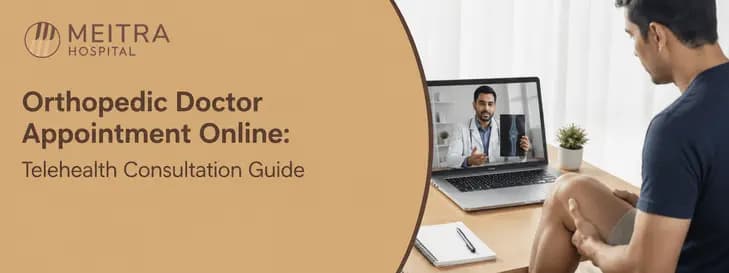

Getting timely orthopedic care no longer means sitting in a crowded waiting room or traveling across the city. Online orthopedic appointments bring expert bone and joint consultations straight to your home, saving time and offering convenience without compromising quality care. Whether you have a nagging knee pain, shoulder stiffness, or need follow-up advice after an injury, telehealth orthopedic services can help you connect with specialists quickly.
Online orthopedic consultation works well for some situations and poorly for others, and knowing the difference is what actually determines whether you get useful care or waste a consultation slot.
This guide walks through when to book online, what to expect during the call, how to pick the right doctor, and what an orthopedic team like the one at Meitra Hospital in Kozhikode typically looks for before recommending surgery, physiotherapy, or further imaging.
When an Online Orthopedic Consultation Actually Makes Sense
Not every bone or joint complaint needs a hospital visit on day one. Based on how orthopedic OPDs triage patients, online consultations tend to work well for:
-
Follow-up visits after a joint replacement, fracture fixation, or spine surgery, where the doctor is reviewing recovery progress, not re-examining the injury.
-
Chronic joint pain, knee osteoarthritis, frozen shoulder, mild spondylosis, where the pattern of pain, not a physical test, guides the next step.
-
Second opinions on an existing diagnosis, MRI, or X-ray report, especially before committing to surgery.
-
Medication review and physiotherapy guidance for conditions already diagnosed.
-
NRI and out-of-station patients who want to consult a specialist before planning travel for treatment.
What Happens During an Online Orthopedic Consultation
Having sat through the typical workflow that hospitals like Meitra follow, here's what the process usually looks like, step by step:
-
Symptom intake form: Before the call, you're asked to describe the pain location, duration, what worsens or relieves it, and any past injuries or surgeries.
-
Report upload: X-rays, MRI scans, or old prescriptions are uploaded in advance so the doctor can review them before the call starts, not during it.
-
The consultation itself: Typically 10–15 minutes, covering history, a visual assessment (the doctor may ask you to show or move the affected joint on camera), and a discussion of likely causes.
-
Provisional plan: This could be a prescription, a physiotherapy referral, advice to get specific imaging done locally, or a recommendation to visit in person for a hands-on exam.
-
Digital prescription and follow-up scheduling: Sent immediately after the call, often with a note on when to review progress.
How to Choose the Right Orthopedic Doctor for an Online Appointment
Not all "online doctor" listings are equal. Before booking, it helps to check a few specifics rather than just picking the first available slot:
| What to Check | Why It Matters |
|---|---|
| Sub-specialty (spine, joint replacement, sports injury, hand & trauma, pediatric ortho) | A spine surgeon and a knee replacement specialist look at the same "back pain" complaint very differently |
| Years of independent practice, not just total experience | Independent decision-making matters more than years spent assisting |
| Whether the hospital has in-person backup at the same facility | Avoids restarting your case history if you need to be seen physically |
| Accreditation of the parent hospital (NABH, JCI) | Signals the consultation is backed by a facility meeting national/international clinical standards |
| Access to your case file across visits | Ensures continuity if your online consult leads to surgery or physiotherapy later |
Common Conditions People Book Online Orthopedic Appointments For
People seek online orthopedic consultations for a wide range of bone, joint, muscle, and spine concerns. The table below highlights some of the most common conditions that prompt patients to book an orthopedic appointment online.
| Condition | Suitable for Online First Consult? | Typical Next Step |
|---|---|---|
| Chronic knee pain / early osteoarthritis | Yes | Physiotherapy plan, imaging review, medication |
| Post-surgery follow-up (joint replacement, fracture) | Yes | Progress review, rehab adjustment |
| Fresh sports injury with swelling/instability | No — needs physical exam | In-person visit, possible MRI |
| Chronic lower back pain / spondylosis | Yes, for initial assessment | Physiotherapy, further imaging if red flags present |
| Suspected fracture, deformity, or inability to bear weight | No — emergency/in-person | Immediate hospital visit |
| Second opinion on planned joint replacement | Yes | Report review, treatment discussion |
| Pediatric limb or gait concerns | Partial — screening only | In-person pediatric orthopedic exam |


What Happens During a Telehealth Orthopedic Appointment
The consultation typically follows a structured format. The doctor begins by reviewing your medical history, current symptoms, and the reason for your visit. They may ask you to move your affected joint in specific directions, demonstrating your range of motion and any pain or stiffness on camera.
They'll inquire about activities that worsen or improve your symptoms, any swelling or deformity you've noticed, and how the condition has affected your daily life.
Based on this conversation and physical assessment, the doctor may recommend conservative treatments such as rest, ice, compression, elevation, anti-inflammatory measures, or specific physiotherapy exercises. They might advise imaging, such as X-rays or ultrasound, if they suspect a structural problem.
The doctor will explain findings in simple terms, avoiding unnecessary jargon, and discuss your treatment options. You'll receive a written summary of the consultation, recommendations, and any prescriptions or referral documents via email or SMS.
If further investigation or in-person examination is needed, the doctor will explain why and guide you toward the next steps.
Also Read: Emergency Orthopedic Care in Kozhikode: When to Get Help
How Meitra Hospital Approaches Orthopedic Care: In and Beyond the Consultation Room
An online consultation is often the first step in your treatment journey, but comprehensive orthopedic care requires access to the right specialists, advanced diagnostics, and seamless follow-up. At Meitra Hospital, Kozhikode, patients can move smoothly from a virtual consultation to in-person evaluation, imaging, surgery, and rehabilitation, all within the same care team.
Key highlights of Meitra's orthopedic services include:
-
Dedicated Centre for Bone, Joint & Spine with expertise in joint replacement, sports injuries, spine surgery, trauma, hand surgery, and pediatric orthopedics.
-
Specialized clinics for conditions such as back pain, sports injuries, scoliosis, brachial plexus disorders, and wrist pain, ensuring focused evaluation and treatment.
-
Advanced orthopedic technology, including the Smith & Nephew CORI robotic-assisted system for joint replacement, OrthoView digital templating, and the LENS surgical imaging system to support precision during surgery.
-
Experienced multidisciplinary team led by senior orthopedic specialists, including experts in robotic joint replacement, spine care, trauma, and pediatric orthopedics.
-
Continuity of care, allowing patients to begin with an online consultation for symptoms, MRI reviews, or second opinions and transition to in-person treatment without repeating their medical history.
-
Convenient for patients across Kerala and Gulf NRIs, offering coordinated care under one roof with internationally aligned treatment standards and cost-effective surgical options.
Whether you need reassurance about a recent injury or are exploring treatment for a complex orthopedic condition, Meitra's integrated approach helps ensure that your care continues seamlessly beyond the initial online consultation.
Chat with our assistant for guidance, or to book a call with a specialist at Meitra Hospital's Centre for Bone, Joint & Spine.
Medical Disclaimer: This article is for general informational purposes only and does not constitute medical advice, diagnosis, or treatment. Always consult a qualified orthopedic specialist for evaluation of your specific symptoms and condition. In case of a medical emergency, please contact your nearest hospital or emergency services immediately.