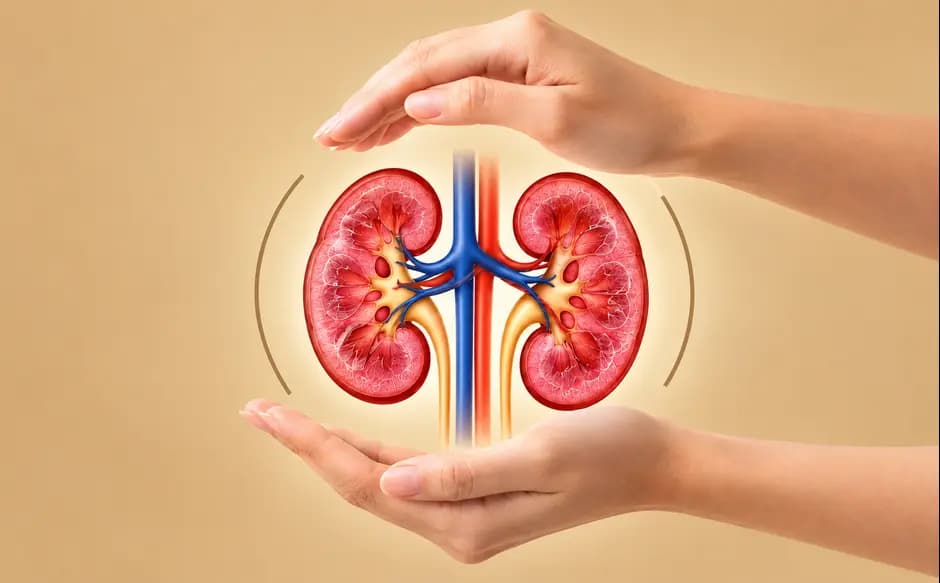

Diabetic nephropathy is kidney damage caused by high blood sugar levels over years of uncontrolled diabetes, and it's one of the leading causes of kidney failure in India. The good news: catching it early and managing your blood sugar closely can slow or even halt its progression. This guide walks you through what causes it, how to spot warning signs, and the most effective ways to protect your kidneys if you have diabetes.
What Is Diabetic Nephropathy?
Diabetic nephropathy is kidney damage caused specifically by long-term high blood sugar. Persistently elevated glucose damages the tiny blood vessels inside the glomeruli, the kidney's filtering units, causing them to thicken, scar, and gradually leak protein into the urine. Left unaddressed, this scarring reduces the kidneys' ability to filter waste, eventually progressing toward kidney failure.
It's worth distinguishing this from other forms of kidney disease that sound similar but have different causes and treatment protocols, for instance, autoimmune-driven conditions like lupus nephritis, or glomerulonephritis triggered by infections or immune disorders. Diabetic nephropathy is metabolic in origin, which is exactly why glycemic control sits at the center of its treatment, in a way it doesn't for autoimmune kidney disease.
Both Type 1 and Type 2 diabetes can lead to nephropathy, though the risk pattern differs. Kidney involvement in Type 1 diabetes typically takes longer to appear (often 10–15 years after diagnosis) but can progress predictably; in Type 2 diabetes, which is far more common in India, kidney damage may already be present at the time of diagnosis, since blood sugar can run high for years before symptoms prompt testing.
How Diabetic Nephropathy Develops: The Stages
Diabetic nephropathy doesn't appear overnight. It progresses through recognizable stages, tracked using two lab values: estimated Glomerular Filtration Rate (eGFR), which measures how well the kidneys filter blood, and Urine Albumin-to-Creatinine Ratio (UACR), which measures protein leakage.
| Stage | eGFR (mL/min/1.73m²) | What's Happening |
|---|---|---|
| Stage 1 | 90+ (with kidney damage markers) | Hyperfiltration; kidneys may initially work harder than normal |
| Stage 2 | 60–89 | Mild function loss; microalbuminuria may begin appearing |
| Stage 3 | 30–59 | Moderate decline; fatigue, swelling can start to appear |
| Stage 4 | 15–29 | Severe decline; symptoms become more noticeable |
| Stage 5 (ESRD) | Below 15 | Kidney failure; dialysis or transplant needed |
Early Signs and Symptoms You Shouldn't Ignore
One of the more frustrating features of diabetic nephropathy is that it is largely silent in its early, most treatable stages. By the time visible symptoms appear, meaningful kidney function may already be lost. Signs worth acting on include:
- Persistent swelling in the feet, ankles, or around the eyes
- Foamy or frothy urine (a sign of protein leakage)
- Fatigue that doesn't improve with rest
- Rising blood pressure that's harder to control than before
- Reduced appetite or a metallic taste, in later stages
- Needing less insulin or diabetes medication than before (a paradoxical warning sign, not a good one)
Because these symptoms often show up only at Stage 3 or later, routine screening, not symptom-watching, is what actually catches the disease early.


How Is Diabetic Nephropathy Diagnosed?
Diagnosis relies on two simple, widely available tests, usually repeated to confirm a pattern rather than a one-off reading:
-
Urine Albumin-to-Creatinine Ratio (UACR): A UACR between 30–300 mg/g indicates microalbuminuria — the earliest detectable sign of diabetic kidney involvement. Above 300 mg/g signals macroalbuminuria and more significant damage.
-
Estimated GFR (eGFR): Calculated from a blood creatinine test, this estimates how much blood the kidneys filter per minute, and is the primary marker for staging.
How Is Diabetic Nephropathy Treated?
Treatment is layered, most patients start with foundational measures, then add specific drug classes as albuminuria or eGFR trends warrant. This is not a "pick one" list; in moderate-to-advanced disease, several of these typically run together.
1. Foundational Care: Glycemic and Blood Pressure Control
Tight blood sugar management (individualized HbA1c targets, since overly aggressive control can itself carry risks in advanced kidney disease) and blood pressure control, generally targeting under 130/80 mmHg for most patients with diabetes and kidney disease, remain the base of every treatment plan. Dietary sodium and protein moderation, weight management, and smoking cessation round out this foundation.
2. RAAS Blockers (ACE Inhibitors / ARBs)
Angiotensin-converting enzyme inhibitors or angiotensin receptor blockers reduce pressure inside the kidney's filtering units and lower protein leakage. These have been standard first-line therapy for diabetic kidney disease with albuminuria for over two decades.
3. SGLT2 Inhibitors
Originally developed as diabetes medications, SGLT2 inhibitors (such as dapagliflozin and empagliflozin) are now recommended as first-line kidney-protective therapy for diabetic kidney disease, independent of how well blood sugar is otherwise controlled.** Updated 2024 KDIGO guidelines** recommend them for patients with diabetes and reduced kidney function or albuminuria, given their demonstrated ability to slow eGFR decline and reduce progression to kidney failure
- GLP-1 Receptor Agonists and Finerenone
For patients who need additional protection beyond an SGLT2 inhibitor and RAAS blocker, or can't tolerate one, GLP-1 receptor agonists offer kidney and cardiovascular benefit alongside glycemic control. Finerenone, a non-steroidal mineralocorticoid receptor antagonist, is now recommended as an add-on for patients with Type 2 diabetes and persistent albuminuria despite standard therapy, per current KDIGO and American Diabetes Association consensus guidance.
5. Managing Advanced Disease
When kidney function declines to Stage 4 or 5 despite optimized medical therapy, the focus shifts to preparing for renal replacement, dialysis (hemodialysis or peritoneal dialysis) or, where suitable, kidney transplantation. Early nephrology involvement at this stage allows time to plan vascular access, evaluate transplant candidacy, and manage complications like anemia and mineral bone disease before they become emergencies.
| Treatment | Primary Role | Typically Used |
|---|---|---|
| Glycemic + BP control | Foundation for all stages | From diagnosis onward |
| ACE inhibitor / ARB | Reduce protein leakage | Any stage with albuminuria |
| SGLT2 inhibitor | Slow eGFR decline | Early-to-moderate stages |
| GLP-1 receptor agonist | Added kidney/CV protection | When further protection needed |
| Finerenone | Reduce residual albuminuria | Add-on despite standard therapy |
| Dialysis / transplant | Replace lost kidney function | Stage 5 / kidney failure |
Why Early Nephrology-Endocrinology Care Changes the Outcome
Because diabetic nephropathy sits at the intersection of two specialties, the biggest gap in real-world care isn't usually the medication, it's coordination. A patient's diabetologist may be focused on HbA1c, while kidney-specific markers like UACR trends can go unchecked for years unless someone is actively tracking both.
At Meitra Hospital's Centre for Renal Health & Intervention in Kozhikode, this is handled through a joint-clinic model: nephrologists led by Dr. George C. Joseph, along with Dr. Kiran S and Dr. Vinugopal, work alongside the hospital's Centre for Endocrinology and Metabolic Disease to review kidney markers as part of routine diabetes follow-up, rather than waiting for a separate referral once damage is already advanced.
Patients with early albuminuria are tracked through a dedicated glomerulonephritis and metabolic-kidney clinic, and those who do progress to advanced disease have on-campus dialysis and transplant-track support within the same hospital system, so care doesn't require moving between institutions at a more fragile stage of illness.
This model matters most for the patients Meitra sees a growing number of: those from across Kerala's Malabar region, as well as international and NRI patients from the Gulf who return for periodic reviews and want continuity between visits rather than piecemeal treatment.
Meitra Hospital is NABH- and NABL-accredited, and its combination of specialist depth with Kerala's comparatively lower treatment costs has made it a practical option for patients weighing quality of care against the cost of prolonged, recurring kidney treatment, a genuine consideration for a lifelong condition like this one.
Conclusion
Diabetic nephropathy is common, progressive, and largely silent — but it is also one of the more manageable complications of diabetes when it's caught early and tracked consistently. The treatment landscape has expanded meaningfully in the past few years: SGLT2 inhibitors, GLP-1 receptor agonists, and finerenone now give doctors tools that go beyond blood pressure control to directly slow kidney decline. The single biggest factor in outcomes, though, remains timing — a UACR and eGFR test done during a routine diabetes check-up costs little and can flag a problem years before symptoms would ever appear. If you have diabetes, ask your doctor when your kidney function was last checked; if it's been longer than a year, that's a reasonable place to start.
If you or a family member has diabetes and hasn't had a kidney function check recently, our care team can help you understand what tests you need and connect you with a nephrologist. Chat with our care assistant on the Meitra Hospital website for quick guidance, or to book a consultation with the Centre for Renal Health & Intervention.
Medical Disclaimer: This article is intended for general informational purposes only and does not constitute medical advice. It is not a substitute for professional diagnosis or treatment. Please consult a qualified nephrologist or physician for evaluation and management specific to your health condition.