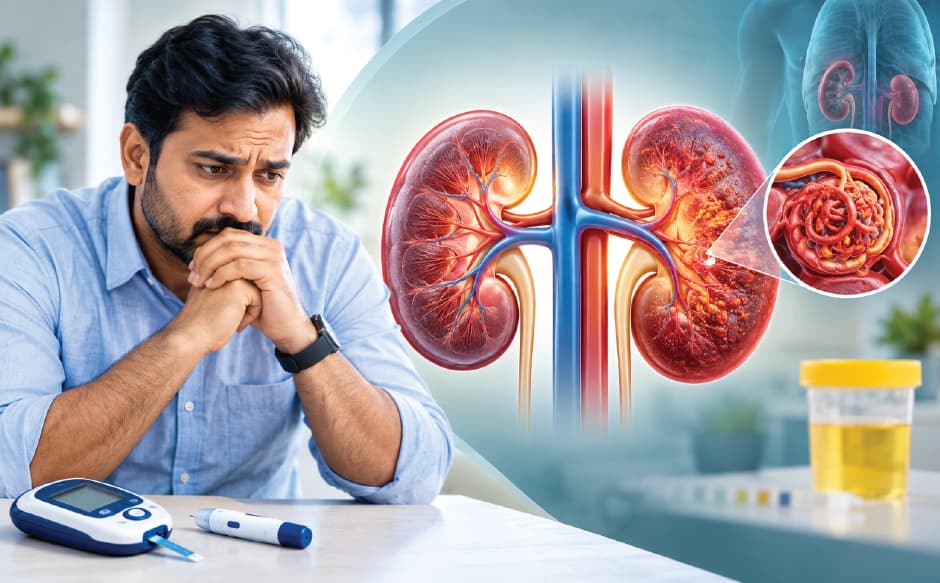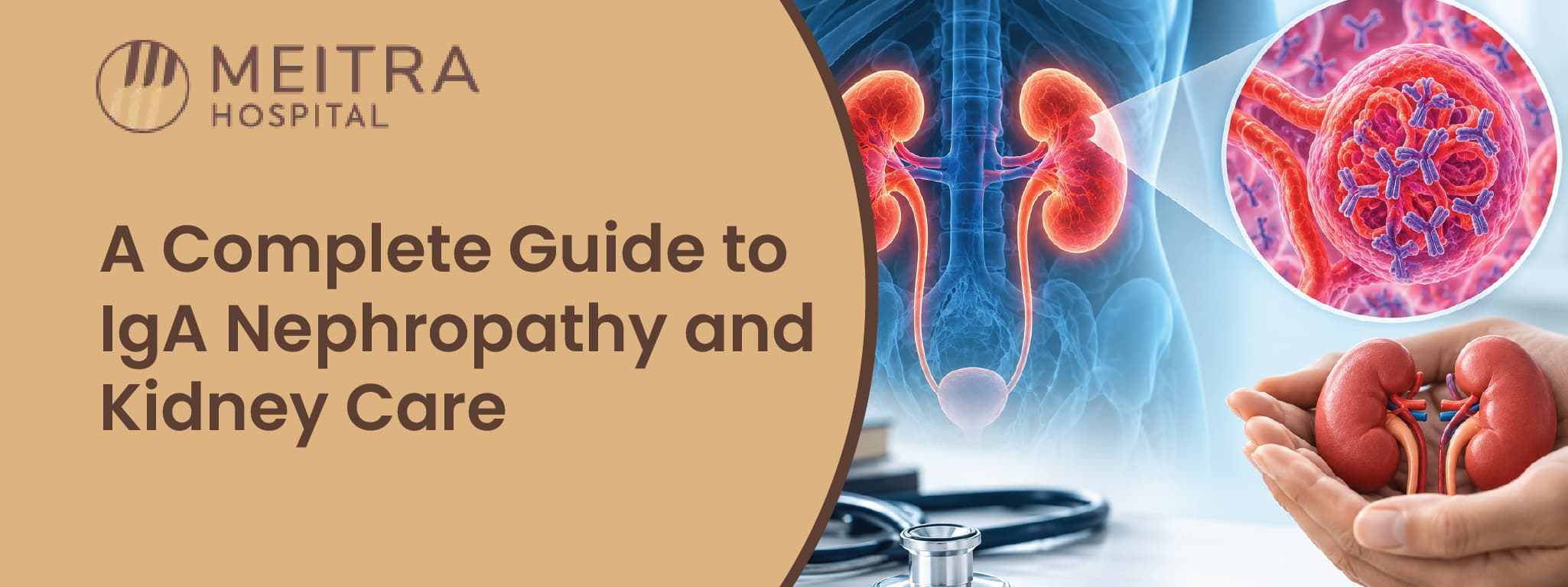

IgA nephropathy is an autoimmune kidney disease where deposits of IgA antibodies (a type of immune protein) build up in your kidneys and gradually damage their filtering units. This condition is one of the most common forms of glomerulonephritis, inflammation of the kidney's filtering structures, worldwide. Understanding what IgA nephropathy is, how it develops, and the management options available can help you work with your kidney specialist to protect your kidney function and maintain your quality of life.
What Is IgA Nephropathy (Berger's Disease)?
IgA nephropathy, also called Berger's disease, is a kidney condition in which an antibody called immunoglobulin A becomes trapped inside the glomeruli — the million-odd microscopic filters inside each kidney.
The process is usually described as four steps happening in sequence:
-
A faulty IgA is produced. Immune tissue in the gut and throat makes a version of IgA1 that is missing a normal sugar coating (galactose-deficient IgA1).
-
The body attacks it. Because it looks abnormal, the immune system makes autoantibodies against it.
-
Immune complexes form and circulate in the bloodstream.
-
They lodge in the glomeruli, triggering inflammation, complement activation, and, over time, scarring.
This is why IgA nephropathy is not a "kidney infection" and cannot be treated with antibiotics. The kidney is the site of injury, not the source of the problem.
It also explains the disease's most recognisable trigger: because the faulty IgA originates in mucosal immune tissue, a throat or chest infection can cause a visible flare within a day or two.
Symptoms of IgA Nephropathy You Should Not Ignore
Early IgA nephropathy is usually symptomless. When symptoms do appear, these are the ones that matter:
-
Cola, tea or rust-coloured urine during or within 1–2 days of a sore throat, cold or chest infection. This is the classic synpharyngitic pattern. It is frequently mistaken for a urinary tract infection, but there is no burning, no fever from the urine itself, and antibiotics do not change it.
-
Persistent frothy or foamy urine, which suggests protein leakage.
-
Swelling of the ankles, feet, hands or around the eyes, often worse in the morning.
-
High blood pressure diagnosed unusually young, especially under 40 with no family history or obesity.
-
Microscopic blood in urine found on a routine or pre-employment test with no stones and no infection.
-
Unexplained fatigue, dull flank or lower back ache, usually later in the course.
A single episode of red urine after a fever is worth a urine test. A repeat episode, or blood that persists on a follow-up sample weeks later, should trigger a nephrology opinion rather than a second course of antibiotics.
How IgA Nephropathy Is Diagnosed
No blood test can confirm IgA nephropathy. Diagnosis is a sequence of tests that narrow the field, ending in a biopsy.
| Test | What it looks for | What it tells you |
|---|---|---|
| Urine routine + microscopy | Blood cells, protein, casts | Dysmorphic red cells and red-cell casts point to a glomerular source, not a stone or infection |
| Urine protein-creatinine ratio (UPCR) | Quantity of protein leak | The single most important number for risk and treatment decisions |
| Serum creatinine + eGFR | Filtration capacity | Establishes baseline kidney function and CKD stage |
| Blood pressure (repeated) | Hypertension | Present in most Indian IgAN patients at diagnosis |
| Autoimmune panel (ANA, ANCA, complement) | Other causes | Rules out lupus nephritis, vasculitis and other mimics |
| Kidney ultrasound | Size, structure, obstruction | Confirms two kidneys of adequate size and safety for biopsy |
| Kidney biopsy | IgA deposits on immunofluorescence | Confirms the diagnosis and generates the MEST-C score |
Why the Kidney Biopsy Cannot Be Skipped
Many patients hesitate at the word "biopsy." It is worth understanding what is actually involved. A renal biopsy is a day-care procedure done under ultrasound guidance with local anaesthesia; a fine needle takes a tissue core roughly the size of a pencil lead, and most patients are observed for a few hours and discharged the same day.
Without it, two things are impossible. First, IgA nephropathy cannot be distinguished from lupus nephritis, membranous nephropathy, or post-infectious glomerulonephritis, all of which present with blood and protein in the urine and all of which are treated completely differently.
Second, there is no way to know how much scarring is already present, which is precisely the variable that decides whether treatment should be cautious or aggressive.
Understanding Your MEST-C Score
Your biopsy report will carry an Oxford MEST-C score. Here is what each letter means in plain terms:
| Letter | Stands for | What a positive score suggests |
|---|---|---|
| M | Mesangial hypercellularity | Active inflammation in the filter's support cells |
| E | Endocapillary hypercellularity | Active inflammation inside the capillary loops; often tracks with higher protein loss |
| S | Segmental glomerulosclerosis | Part of the filter has already scarred |
| T | Tubular atrophy / interstitial fibrosis | Scarring beyond the filters; the strongest predictor of long-term outcome |
| C | Crescents | Aggressive, rapidly progressive inflammation needing urgent treatment |
The T score deserves particular attention. A T2 score means significant permanent scarring, and it is the finding most consistently linked to progression.


IgA Nephropathy Treatment in 2026
Treatment has changed more in the last four years than in the previous forty. The updated KDIGO 2025 guideline for IgA nephropathy now describes a layered approach rather than a single pathway.
Layer 1: Optimised Supportive Care
Every patient starts here, regardless of severity, and it is not a placeholder while "real" treatment is decided, it is the treatment for the majority.
-
Blood pressure control to target, usually with an ACE inhibitor or ARB titrated to the maximum tolerated dose.
-
Proteinuria reduction, aiming to get urine protein consistently below 1g/day, and ideally below 0.5g/day, which is associated with markedly better kidney survival.
-
SGLT2 inhibitors, now standard for progressive chronic kidney disease including IgA nephropathy, based on the IgAN subgroups of the DAPA-CKD and EMPA-KIDNEY trials.
-
Salt restriction, weight management, smoking cessation and avoidance of NSAID painkillers.
-
Cardiovascular risk management, since heart disease, not kidney failure, is a leading cause of death in CKD.
A minimum of 90 days on optimised supportive care is normally required before escalating, because a meaningful proportion of patients reach target on this alone.
Layer 2: Disease-Targeted Therapy for High-Risk Patients
For patients who remain above the proteinuria threshold despite optimised supportive care, several targeted agents have now been approved internationally.
| Agent | Mechanism | Regulatory status |
|---|---|---|
| Targeted-release budesonide (Nefecon) | Acts on gut mucosal immune tissue to reduce faulty IgA1 production | Full FDA and EMA approval |
| Sparsentan | Dual endothelin-A and angiotensin II receptor antagonist | Full FDA approval (Sept 2024); liver monitoring required |
| Iptacopan | Oral complement factor B inhibitor | Accelerated FDA approval (Aug 2024) |
| Atrasentan | Selective endothelin-A receptor antagonist | Accelerated FDA approval (Apr 2025) |
| Sibeprenlimab | Injectable APRIL inhibitor | Accelerated FDA approval (Nov 2025) |
| Corticosteroids | Broad immunosuppression | Restricted use; benefit must be weighed against infection risk |
Living With IgA Nephropathy: What to Expect
IgA nephropathy is a long-term condition managed over decades, and the day-to-day management is mostly unglamorous consistency.
| Area | Practical guidance |
|---|---|
| Monitoring | BP, urine protein and creatinine typically every 3–6 months once stable; more often after a change in treatment |
| Diet | Salt restriction is the highest-value change. Protein is moderated, not eliminated. There is no evidence that a gluten-free or "kidney detox" diet treats IgA nephropathy |
| Infections | Treat throat and chest infections promptly. Report any flare of visible haematuria |
| Painkillers | Avoid regular NSAIDs (ibuprofen, diclofenac). Use paracetamol unless advised otherwise |
| Pregnancy | Possible for many women, but plan it, ACE inhibitors and ARBs must be changed before conception |
| Vaccination | Routine vaccines are recommended; especially important if on complement-inhibiting or immunosuppressive therapy |
| Home BP monitoring | A validated home BP monitor is one of the most useful things a patient can own |
Why Patients Choose Meitra Hospital for IgA Nephropathy Care
IgA nephropathy is a diagnosis that depends on getting three things right in sequence: a timely biopsy, an accurate MEST-C read, and a treatment plan matched to that score. In many cases patients lose months moving between a physician, a diagnostic lab and a distant nephrologist before that sequence completes.
Meitra Hospital in Kozhikode was built to compress it. Its Centre for Renal Health & Intervention, part of the Centre of Excellence for Nephro-Urosciences & Kidney Transplantation, runs a dedicated Glomerulonephritis Clinic, a specialist outpatient stream specifically for immune-mediated kidney disease, separate from general CKD care. That matters, because conditions like IgA nephropathy need diagnostic and therapeutic reasoning that routine CKD follow-up is not designed for.
What is available on the same campus:
-
Day-care renal biopsy, so diagnosis is not delayed by referral to an external centre.
-
A nephrology team led by Dr. George C. Joseph (HOD), with consultants including Dr. Sarfaraz Aslam, who trained in nephrology at Government Medical College, Calicut, alongside Dr. Kiran S and Dr. Vinugopal.
-
Dedicated specialty clinics, General Nephrology, Glomerulonephritis and Renal Transplant, so patients move between stages without changing hospitals.
-
Full-spectrum dialysis backup including ICU haemodialysis, peritoneal dialysis, sustained low-efficiency dialysis (SLED) and plasmapheresis, relevant for the minority who present with crescentic, rapidly progressive disease.
-
Vascular access and transplant capability on site, including tunnelled catheters, AV fistula creation and laparoscopic donor nephrectomy, meaning a patient whose disease progresses never has to start again elsewhere.
-
JCI and NABH accreditation, with NABL-accredited laboratory services.
For patients travelling from across Kerala, from the Gulf, or from the wider NRI community, Meitra runs a dedicated international patient service with a telemedicine pathway that allows records review and workup planning before travel, reducing the number of physical visits needed and the total cost of getting an answer.
Care in Kozhikode is delivered at a fraction of comparable Gulf, UK or US pricing, without compromising on biopsy quality, histopathology reporting or specialist follow-up.
Talk to a Meitra nephrology coordinator. If you have unexplained blood or protein in your urine, or a biopsy report you do not fully understand, chat with our assistant for Renal Health & Intervention to arrange a consultation or a second opinion on an existing report.