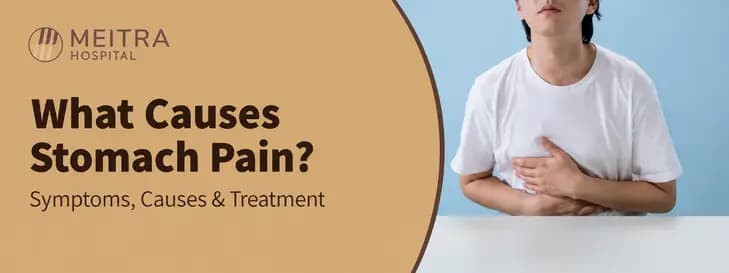

Almost everyone has clutched their stomach at some point and wondered, "Is this just gas, or is something actually wrong?" It's a fair question, because stomach pain is one of the most common, and most misunderstood, symptoms in medicine. It can mean you ate too fast, or it can be the first sign of appendicitis, a gallstone attack, or a gastrointestinal bleed.
This article breaks down what actually causes stomach pain, organised the way gastroenterologists actually think about it, not just as a list of scary diagnoses, so you know what's likely benign, what needs a same-week appointment, and what needs an ER visit tonight.
How Doctors Actually Classify Stomach Pain (And Why Location Matters More Than You Think)
In a clinical setting, a doctor's first question isn't "what disease do you have," it's "where exactly does it hurt, and what does it feel like?" That's because the abdomen is mapped into regions, and pain in each region points toward specific organs.
Doctors generally sort abdominal pain into three types:
-
Visceral pain: Dull, crampy, poorly localised pain that comes from the organs themselves (like early appendicitis, which often starts as vague pain around the belly button before moving to the lower right).
-
Parietal (somatic) pain: Sharp, well-localised pain that occurs when the inflamed organ irritates the abdominal wall lining (peritoneum). This is the kind of pain that gets worse when you cough, move, or press on the area.
-
Referred pain: Pain felt in a spot far from the organ actually causing it. Gallbladder pain, for instance, is frequently felt in the right shoulder blade, and heart attacks can present as upper abdominal discomfort rather than chest pain.
Common Causes of Stomach Pain, by Location
Where your stomach hurts can help narrow down the list of possible causes. The table below outlines common conditions associated with pain in different areas of the abdomen.
| Location | Likely Causes |
|---|---|
| Upper right abdomen | Gallstones, biliary colic, hepatitis, liver congestion |
| Upper left / upper mid (epigastric) | Gastritis, peptic ulcer, GERD/acid reflux, pancreatitis |
| Lower right abdomen | Appendicitis, ovarian cyst (in women), inguinal hernia |
| Lower left abdomen | Diverticulitis, constipation, sigmoid colon spasm |
| Diffuse / all over | Gastroenteritis (stomach flu), food poisoning, IBS, bowel obstruction |
| Comes in waves (colicky) | Kidney stones, gallstones, early bowel obstruction |
Everyday, Usually Harmless Causes
These account for the vast majority of stomach pain cases and typically settle within a day or two:
- Indigestion (dyspepsia): After heavy, oily, or spicy meals
- Gas and bloating: From carbonated drinks, beans, cruciferous vegetables, or swallowed air
- Constipation: Reduced fibre or water intake, sedentary habits
- Food intolerance: Lactose intolerance is extremely common and often undiagnosed for years
- Menstrual cramps and ovulation pain: Cyclical, lower abdominal
- Muscle strain: From exercise, coughing, or a sudden movement
Digestive Conditions That Cause Recurring Pain
- Acid reflux / GERD: Burning pain behind the breastbone or upper stomach, worse when lying down
- Peptic ulcers: Often linked to H. pylori infection or long-term NSAID use, per Emerson Health
- Irritable Bowel Syndrome (IBS): Chronic cramping tied to bowel habit changes
- Gallstones: Sudden, intense right-upper pain after fatty meals
- Lactose intolerance and celiac disease: Pain tied closely to specific foods.
Also Read: Acid Reflux Home Remedies & Prevention Guide
Serious Causes That Need Urgent Medical Attention
- Appendicitis: Pain starting near the navel, migrating to the lower right, often with fever and nausea
- Pancreatitis: Severe upper abdominal pain radiating to the back
- Bowel obstruction: Severe cramping, vomiting, inability to pass gas or stool
- Perforated ulcer: Sudden, severe, board-like abdominal rigidity
- Diverticulitis: Lower-left pain with fever, common after age 50
- Ectopic pregnancy: One-sided pelvic pain in women of reproductive age; a medical emergency
- Kidney stones: Colicky pain radiating from the back/side to the groin


When Stomach Pain Is a Medical Emergency
Not all stomach pain needs a hospital visit, but some absolutely does. Seek immediate medical care if your stomach pain comes with any of the following:
- Pain that is sudden, severe, and does not ease within an hour
- A rigid, board-like, or extremely tender abdomen
- High fever with chills
- Persistent vomiting, especially if it contains blood or looks like coffee grounds
- Blood in stool, or black, tarry stools
- Inability to pass gas or have a bowel movement, along with bloating
- Pain during pregnancy, especially one-sided
- Pain following a recent injury or accident
- Yellowing of the skin or eyes (jaundice) alongside pain
- Pain radiating to the chest, jaw, or arm (rule out cardiac causes first)
If you notice even two or three of these together, it's not the time to "wait it out," it's the time to get evaluated.
Why Meitra Hospital Is a Trusted Choice for Stomach and Digestive Care
If you're dealing with stomach pain that hasn't resolved on its own, where you get evaluated matters almost as much as when. This is where Meitra Hospital's Centre of Excellence for Gastrosciences, located in Kozhikode (Calicut), Kerala, has built a reputation that extends well beyond the Malabar region.
Here's what actually sets the experience apart for patients:
1. Round-the-clock emergency access.
Stomach pain doesn't wait for office hours, and neither does Meitra's Gastroenterology department. The hospital runs 24/7 emergency consultation and endoscopy services, supported by four advanced endoscopy suites equipped with automated, mechanized disinfection systems, meaning a patient with sudden, severe pain at 2 a.m. isn't stuck waiting until morning for answers.
2. A team, not a single doctor.
The Centre brings together gastroenterologists, GI surgeons, endoscopists, and interventional radiologists under one department, so conditions that need both medical management and surgical intervention, like complicated gallstones or gastric cancer, don't require patients to be bounced between unconnected specialists at different facilities.
3. Minimally invasive surgical expertise.
For conditions that do need surgery, Meitra's GI Surgery and Advanced Laparoscopy team focuses on keyhole techniques wherever possible, which typically means smaller incisions, less post-operative pain, and a faster return to normal life compared to open surgery.
4. Built for both routine and complex cases.
From common concerns like gallstones, hepatitis, and non-alcoholic fatty liver disease to advanced conditions such as liver cirrhosis, liver failure, and gastric cancer, the department is equipped to manage the full spectrum without referring patients elsewhere mid-treatment.
5. Genuinely accessible for international and out-of-state patients.
Since Meitra was established in 2012 with the specific goal of offering tertiary-level care benchmarked against global hospitals, it has developed dedicated support for patients travelling from the Gulf, other parts of India, and abroad, including help with medical visas, travel logistics, accommodation, and language translation.
Combined with treatment costs that remain significantly more affordable than comparable centres in the West or in Gulf countries, it's a practical option for patients who need serious digestive care without the financial strain of overseas treatment.
Don't self-diagnose a symptom this common and this variable. Chat with our medical assistant for guidance on next steps.
Medical Disclaimer: This article is intended for general informational purposes only and does not constitute medical advice, diagnosis, or treatment. Stomach pain can stem from a wide range of causes, some of which require urgent medical attention. Always consult a qualified physician or visit the nearest emergency department for evaluation of any new, severe, or persistent abdominal pain. Meitra Hospital and the authors of this article are not liable for decisions made based solely on this content.