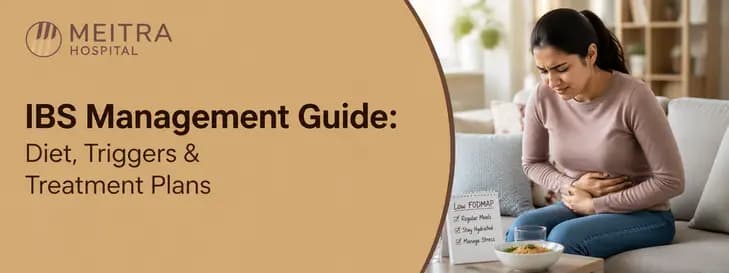

If you've spent years quietly rearranging your meal times, skipping social dinners, or keeping a mental map of "safe" bathrooms wherever you go, you're not being dramatic, and you're not alone. Irritable Bowel Syndrome (IBS) is one of the most common yet most misunderstood digestive conditions.
While there is no single cure, a combination of dietary adjustments, lifestyle modifications, and medical treatments can help manage symptoms effectively. This guide covers how IBS is actually diagnosed, how to tell it apart from conditions it's often confused with, and, unlike most guides that stop at "try a low-FODMAP diet" exactly how to test foods back into your diet, day by day, so you land on a routine you can actually live with.
What Is IBS, Really? (And What It Isn't)
IBS is a functional gastrointestinal disorder, meaning the gut doesn't show structural damage on scans or biopsies, but it doesn't function normally either. Doctors typically use the Rome IV criteria to diagnose it: recurrent abdominal pain, on average at least one day a week in the last three months, associated with two or more of the following, pain related to defecation, a change in stool frequency, or a change in stool form.
A common point of confusion is IBS versus Inflammatory Bowel Disease (IBD), Crohn's disease and ulcerative colitis. These sound similar but are entirely different conditions. IBD involves actual inflammation and tissue damage visible on colonoscopy and requires immunosuppressive treatment; IBS does not show this damage and is managed very differently. Mistaking one for the other or self-diagnosing based on symptoms alone, is one of the most common reasons patients delay getting the right treatment for months or years.
Is This IBS, or Something Else? A Quick Self-Check
Before diving into IBS-specific management, it's worth ruling out the look-alikes, because the fixes are completely different.
| Condition | Key Distinguishing Pattern | What Usually Rules It In/Out |
|---|---|---|
| IBS | Pain tied to bowel movements; symptoms fluctuate with stress, diet, hormones | No blood in stool, no unexplained weight loss, no nighttime symptoms |
| Lactose intolerance | Symptoms appear 30 min–2 hrs after dairy specifically, not other foods | Symptoms resolve almost completely on a dairy-free trial |
| Celiac disease | Chronic diarrhoea/bloating plus fatigue, anaemia, or weight loss with gluten-containing meals | Confirmed via blood antibody test + biopsy, not a gluten-free "trial" alone |
| IBD (Crohn's/UC) | Blood in stool, persistent diarrhoea, fatigue, fever, nighttime symptoms | Confirmed via colonoscopy showing visible inflammation |
The 4 Types of IBS; Why Your Subtype Changes Everything
Not all IBS looks the same, and this is exactly where generic advice ("just eat more fibre") goes wrong.
| Subtype | Dominant Pattern | Common Mistake in Self-Management |
|---|---|---|
| IBS-C (constipation-predominant) | Hard, infrequent stools | Adding insoluble fibre too fast, worsening bloating |
| IBS-D (diarrhoea-predominant) | Loose, frequent stools, urgency | Over-restricting food entirely instead of identifying specific triggers |
| IBS-M (mixed) | Alternating constipation and diarrhoea | Treating it as one fixed subtype instead of tracking daily patterns |
| IBS-U (unclassified) | Doesn't fit a clear pattern | Skipping proper diagnostic workup |
Knowing your subtype is the first real step toward a management plan that works, because the diet and medication strategy for IBS-C is often the opposite of what helps IBS-D.


What Triggers IBS Flare-Ups? (India-Specific Patterns)
Most English-language IBS content is written for a Western diet and lifestyle. In clinical practice across Indian metros, a few trigger patterns show up repeatedly and rarely get discussed:
-
Fried tea-time snacks and heavy onion-garlic bases, staples of Indian home cooking that are also common IBS triggers due to their fat and fermentable-carbohydrate content.
-
Irregular meal timing, especially among IT professionals, healthcare workers, and anyone on rotating shifts, skipping meals and then eating large portions late at night disrupts gut motility.
-
Excess caffeine and chai consumed on an empty stomach, which can stimulate colon contractions and worsen urgency in IBS-D.
-
The gut-brain axis, the gut has its own nervous system (the enteric nervous system) that communicates directly with the brain. Stress and anxiety don't just "feel" like they affect digestion; they measurably alter gut motility and sensitivity, which is why flare-ups often cluster around exam periods, work deadlines, or family stress.
-
Hormonal fluctuations, many women report symptom flares around their menstrual cycle, and IBS is diagnosed roughly twice as often in women as in men.
How Doctors Diagnose IBS
IBS is a diagnosis of exclusion, but that doesn't mean it's a guess. A thorough workup typically includes a detailed symptom history, blood tests to rule out anaemia or thyroid issues, and for select patients, a colonoscopy or stool tests to rule out other conditions.
Certain symptoms are red flags that should never be self-managed and need prompt specialist evaluation:
- Unintentional weight loss
- Blood in stool
- Symptoms that wake you up at night
- New onset of symptoms after age 50
- Family history of colorectal cancer or IBD
IBS Diet Management: The Core Treatment Strategy
Diet is the single most evidence-backed lever in IBS management, and the low-FODMAP diet remains the most researched approach. FODMAP stands for Fermentable Oligosaccharides, Disaccharides, Monosaccharides, and Polyols, a group of short-chain carbohydrates that are poorly absorbed in the small intestine, ferment in the colon, and draw in water, producing the gas, bloating, and altered bowel habits typical of IBS.
The diet works in three distinct phases and skipping straight to permanent restriction (a common mistake) is why many people give up on it too early:
- Elimination (2–6 weeks): Strictly limit high-FODMAP foods to calm symptoms and establish a baseline.
- Reintroduction (6–8 weeks): Reintroduce one FODMAP group at a time to identify your specific triggers.
- Personalisation (ongoing): Build a long-term diet that only restricts the foods that actually trigger your symptoms, not an entire food group unnecessarily.
High-FODMAP vs. low-FODMAP foods (Indian diet context):
| High-FODMAP (limit during elimination) | Low-FODMAP (generally well-tolerated) |
|---|---|
| Onion, garlic (raw and cooked) | Ginger, asafoetida (hing) as onion-garlic substitutes |
| Wheat-based rotis, maida items | Rice, rice-based rotis, oats (in moderation) |
| Rajma, chana, most dals in large portions | Moong dal, tofu, small portions of masoor dal |
| Milk, paneer in excess, condensed milk sweets | Lactose-free milk, hard cheeses, small servings of curd |
| Apples, mangoes, watermelon | Papaya, oranges, grapes, unripe banana |
| Cauliflower, mushrooms | Carrots, cucumber, tomato, spinach |
The Reintroduction Ladder: How to Test Foods Back In (Step by Step)
This is the part almost everyone skips, and it's the part that determines whether the diet actually works long-term or just becomes permanent, unnecessary restriction.
Once your symptoms have settled during the 2–6 week elimination phase, reintroduce one FODMAP group at a time, using a three-day testing pattern for each group, with a 2–3 day washout (back to your safe elimination foods) before testing the next group:
| Day | Action |
|---|---|
| Day 1 | Small test dose of the food (e.g., ¼ cup regular dal instead of moong dal), note symptoms over the next 24 hrs |
| Day 2 | If no reaction, a moderate dose (e.g., ½ cup) |
| Day 3 | If still tolerated, a normal portion size |
| Day 4–6 | Washout, return to elimination-safe foods regardless of the result, to let your gut reset before testing the next group |
Repeat this for each FODMAP group separately, lactose, fructans (wheat, onion, garlic), galacto-oligosaccharides (legumes), polyols (certain fruits), and excess fructose, rather than testing several at once, which is the single most common reason people can't figure out which food is actually the problem.
While lifestyle changes are the foundation of IBS management, some people continue to experience persistent symptoms that require a more comprehensive medical evaluation.
Lifestyle and Stress-Based Management
Because of the gut-brain connection, lifestyle interventions aren't "soft" add-ons, they're clinically meaningful. Gut-directed cognitive behavioural therapy (CBT) and hypnotherapy have shown measurable symptom improvement in clinical trials, particularly for patients whose flares are closely tied to stress.
One specific, usable technique: diaphragmatic ("belly") breathing for 5 minutes before meals, inhale for a count of 4, letting the stomach (not chest) rise, hold for 2, exhale for 6. This activates the vagus nerve, the primary communication line between gut and brain, and has been shown to reduce meal-triggered bloating in IBS patients by shifting the nervous system out of a stress response before digestion even starts. It costs nothing and takes less time than making the meal itself.
Beyond that, regular moderate exercise, consistent sleep timing, and short walks after meals all support healthier gut motility over time.
What IBS Care Actually Looks Like When Diet Alone Isn't Enough
When IBS symptoms persist despite dietary changes, stress management, and medications, the next step is confirming that IBS, not another digestive condition, is responsible for your symptoms. This often requires a structured evaluation by specialists who can rule out conditions with similar presentations, such as inflammatory bowel disease (IBD), celiac disease, colorectal polyps, or gastrointestinal infections.
At Meitra Hospital, patients benefit from a multidisciplinary approach that streamlines diagnosis and treatment under one roof.
Here's what comprehensive IBS care typically includes:
- Comprehensive gastroenterology assessment to review symptoms, medical history, previous treatments, and identify any red-flag signs.
- Advanced diagnostic testing including colonoscopy, upper GI endoscopy, laboratory investigations, and imaging when clinically indicated to exclude other gastrointestinal disorders.
- Personalised treatment planning based on your IBS subtype (IBS-C, IBS-D, IBS-M, or IBS-U), symptom severity, and lifestyle factors.
- Dietary and nutritional guidance with practical recommendations on approaches such as a low-FODMAP diet, trigger-food identification, and long-term nutrition planning.
- Coordinated follow-up care where gastroenterologists, GI surgeons, endoscopists, and other specialists collaborate when additional interventions are required, reducing unnecessary referrals and delays.
For patients travelling from other parts of India or overseas, Meitra also offers dedicated international patient support, helping coordinate consultations, investigations, travel, accommodation, and treatment schedules.
Chat with our virtual assistant for quick guidance.
Medical Disclaimer: This article is for general informational purposes only and does not constitute medical advice, diagnosis, or treatment. Always consult a qualified gastroenterologist or physician regarding your specific symptoms and before starting, stopping, or changing any diet or treatment plan.