
Every year, thousands of people across the world discover they have kidney disease only after a routine urine test flags blood or protein they never knew was there.
Glomerulonephritis is inflammation of the tiny filtering units in your kidneys, and it can range from mild to serious. However, unlike an infection you treat and forget, treatment for glomerulonephritis depends heavily on identifying the right subtype at the right stage, with the right specialist involved early. the The good news is that with proper treatment and management, many people with this condition can protect their kidney function and maintain a good quality of life. This guide explains how doctors treat glomerulonephritis, what you can expect from different approaches, and how to work with your care team to stay healthy.
What Is Glomerulonephritis?
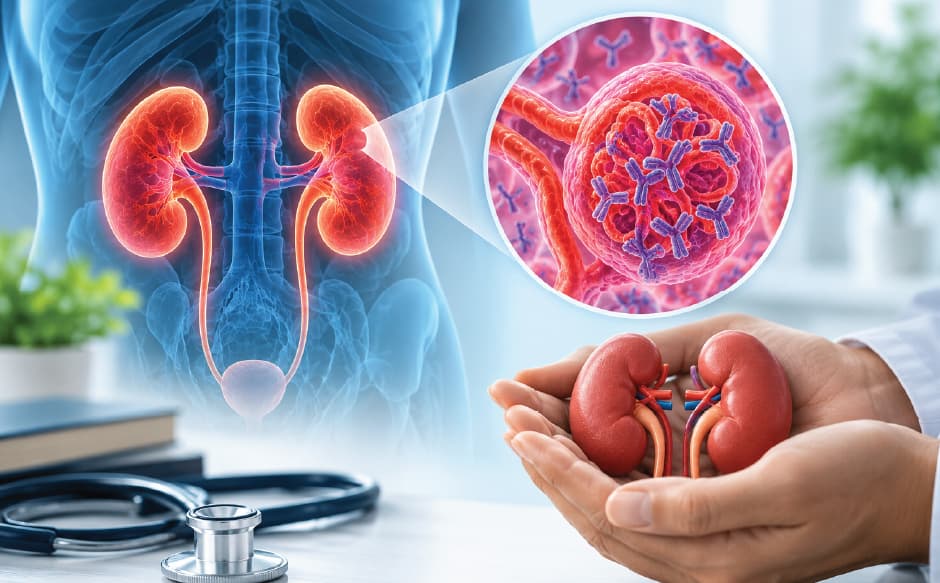
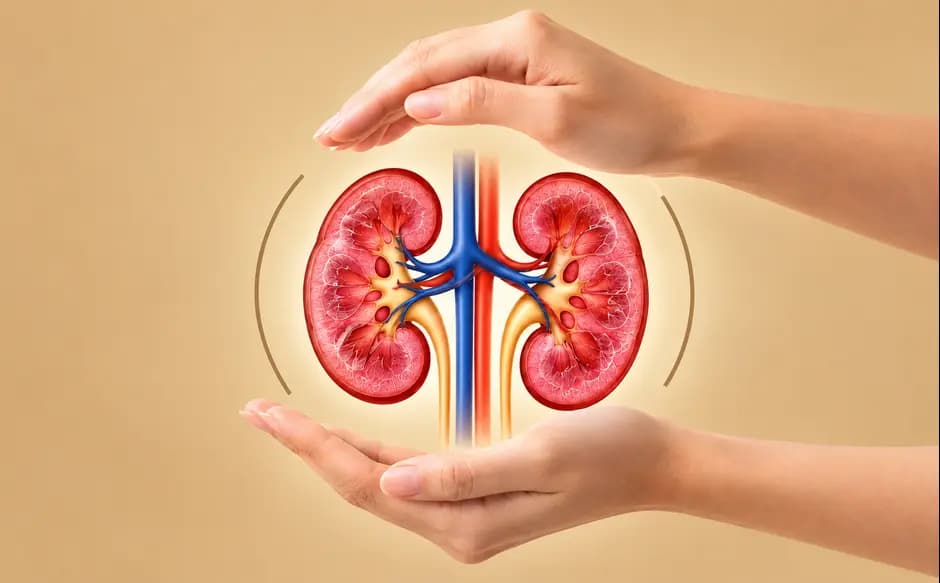
Your kidneys filter waste from your blood through millions of tiny units called glomeruli. Together, these glomeruli filter waste and excess fluid from the blood while keeping essential proteins and blood cells in circulation. Glomerulonephritis occurs when these filters become inflamed, letting blood and protein leak into the urine while waste products build up in the bloodstream instead of being cleared out.
Glomerulus acts as an extremely fine sieve, tight enough to hold back red blood cells and large protein molecules, but porous enough to let water, salts, and waste pass through.
When inflammation damages this sieve, gaps appear that shouldn't be there. Protein and blood start leaking into the urine, and over time, scarring can reduce how much blood the kidney is able to filter at all.
This is why foamy or tea-coloured urine is so often the very first clue a patient notices, sometimes before any other symptom appears.
Treatment focuses on controlling inflammation, protecting remaining kidney function, and managing symptoms like swelling, high blood pressure, and protein loss in urine.
The specific approach depends on what caused the inflammation, how quickly it developed, and how much kidney damage has already occurred. Early treatment is crucial because the kidneys have limited ability to repair themselves, and halting inflammation early can prevent permanent scarring.
Types of Glomerulonephritis
Nephrologists broadly classify glomerulonephritis by how quickly it develops and how long it lasts.
1. Acute Glomerulonephritis
This form appears suddenly, often one to three weeks after an infection, and can cause a sharp drop in kidney function over days. It is frequently reversible if treated promptly and the underlying trigger is addressed.
2. Chronic Glomerulonephritis
This develops silently over months or years, sometimes with no symptoms at all until a routine test picks up abnormal protein or creatinine levels. By the time it's found, some kidney scarring may have already occurred, which is why regular health check-ups matter even when nothing feels wrong.
3. Rapidly Progressive Glomerulonephritis (RPGN)
This is a medical emergency in nephrology. RPGN causes kidney function to decline within days to weeks and needs immediate hospital-based treatment, usually high-dose immunosuppressive therapy, to prevent irreversible kidney failure.
What Causes Glomerulonephritis?
Glomerulonephritis isn't a single disease; it's an umbrella term for several distinct conditions that share one outcome: inflamed, damaged glomeruli. Broadly, the causes fall into two categories.
1. Infection-Triggered Glomerulonephritis
Post-streptococcal glomerulonephritis, triggered by an untreated strep throat or skin infection, remains far more common in parts of Asia, Africa, and Latin America, including India, than in high-income countries, where improved antibiotic access has made it comparatively rare. Other infections, including bacterial endocarditis, hepatitis B and C, and, in some cases, malaria, have also been linked to glomerulonephritis.
2. Autoimmune and Immune-Related Causes
A large share of glomerulonephritis cases are autoimmune in origin, where the immune system mistakenly attacks the kidney's own tissue. The most common of these worldwide is IgA nephropathy, where an antibody called immunoglobulin A builds up inside the glomeruli.
How common IgA nephropathy is varies sharply by region: recent global burden research estimates it accounts for close to 45% of glomerulonephritis-related kidney disease in China, and around 16.7% in India, a gap researchers attribute partly to genetic and environmental factors, and partly to differences in how often biopsies are performed.
Other autoimmune triggers include lupus nephritis (linked to systemic lupus erythematosus), ANCA-associated vasculitis, and Goodpasture syndrome, a rare condition in which antibodies attack both the kidneys and lungs at once.
Symptoms You Shouldn't Ignore
Glomerulonephritis symptoms range from subtle to severe, and many people notice nothing at all in the early chronic stages. It's worth seeing a doctor promptly if you notice:
- Urine that looks pink, red, brown, or tea-coloured (a sign of blood)
- Foamy or bubbly urine, which can indicate excess protein loss
- Swelling around the eyes, ankles, feet, or abdomen
- New or worsening high blood pressure
- Reduced urine output
- Unexplained fatigue or loss of appetite
Because many of these signs overlap with far less serious conditions, the only way to know for certain is through proper kidney function testing, which is where diagnosis comes in.
How Doctors Diagnose Kidney Inflammation
Before treatment begins, your doctor needs to understand exactly what type of glomerulonephritis you have.
The diagnostic process starts with blood tests that check kidney function markers like creatinine and blood urea nitrogen, along with urinalysis to detect protein and blood in your urine.
High blood pressure is often present and will be monitored carefully. Imaging studies like ultrasound may show kidney swelling or other structural changes. In many cases,
your doctor will recommend a kidney biopsy, a small tissue sample taken with a needle, which shows exactly what type of inflammation is present under a microscope.
This is the gold standard for diagnosis because it reveals whether you have post-infectious glomerulonephritis, IgA nephropathy, lupus nephritis, or another specific form.
Knowing the exact type guides treatment decisions and helps predict how the condition might progress.


Main Treatment Approaches for Glomerulonephritis
There's no single glomerulonephritis treatment that works for everyone, the approach is built around the specific subtype, how far it has progressed, and the patient's overall health. Most treatment plans combine several of the following.
1. Medications That Control Inflammation and Immunity
For autoimmune and immune-related glomerulonephritis, corticosteroids and immunosuppressive drugs such as mycophenolate mofetil or cyclophosphamide are commonly used to calm the immune response that's damaging the kidneys. In more severe or rapidly progressive cases, plasmapheresis, a procedure that filters harmful antibodies out of the blood, may be added.
2. Treating the Underlying Cause
When glomerulonephritis follows an infection, treating that infection is often enough to allow the kidneys to recover on their own, particularly in children with post-streptococcal glomerulonephritis. For lupus nephritis or vasculitis-related disease, managing the underlying autoimmune condition is central to protecting kidney function long-term.
3. Blood Pressure and Protein-Loss Control
ACE inhibitors and ARBs (angiotensin receptor blockers) are widely prescribed, not just to control blood pressure but because they specifically reduce the amount of protein leaking through damaged glomeruli, one of the strongest predictors of how the disease will progress. Diuretics may be added to manage fluid retention and swelling.
4. Dialysis and Kidney Transplant for Advanced Cases
If glomerulonephritis has progressed to kidney failure despite treatment, dialysis becomes necessary to take over the kidney's filtering role. Depending on the patient's condition, this may mean haemodialysis, peritoneal dialysis, or in acute hospital settings, sustained low-efficiency dialysis (SLED). For patients who reach end-stage kidney disease, a kidney transplant remains the most effective long-term option, offering a better quality of life than long-term dialysis for suitable candidates.
Diet and Lifestyle for Glomerulonephritis Patients
Alongside medication, day-to-day habits play a meaningful role in slowing disease progression:
- Limiting sodium intake to help control blood pressure and reduce swelling
- Moderating protein intake as advised by a renal dietitian, since excess protein places extra load on already-damaged glomeruli
- Monitoring and managing potassium and phosphorus levels in more advanced stages
- Staying within a healthy weight range and staying active as tolerated
- Avoiding NSAIDs and other medications that can further stress the kidneys, unless cleared by a doctor
- Keeping every scheduled blood and urine test, even when feeling well, chronic glomerulonephritis can progress silently
Also Read: A Complete Patient’s Guide to Kidney Transplant Hospitals in Kerala
Why Meitra Hospital Is a Trusted Choice for Glomerulonephritis Treatment in Kerala
Glomerulonephritis care works best when diagnosis, medical management, dialysis, and transplant planning happen under one coordinated team, rather than being split across multiple referrals.
This is the model Meitra Hospital in Kozhikode (Calicut), Kerala, has built through its Centre of Excellence for Nephro-Urosciences & Kidney Transplantation, which brings nephrology and urology together specifically to manage conditions such as glomerulonephritis, polycystic kidney disease, and difficult-to-control blood pressure linked to kidney disease.
The department is led by a team of nephrologists, including Dr. George C. Joseph (HOD) and Dr. Sarfaraz Aslam, who trained in nephrology at Government Medical College, Calicut, and has been closely involved in developing Meitra's renal transplant programme.
On the treatment side, Meitra's dialysis division is built to support glomerulonephritis patients at every stage of disease severity, from routine outpatient management to intensive-care level support. This includes ICU haemodialysis, peritoneal dialysis, sustained low-efficiency dialysis (SLED), and plasmapheresis, all available within the same nephro-urology unit. For patients whose glomerulonephritis has progressed toward kidney failure, this means the transition from medical management to dialysis, and eventually to transplant evaluation if needed, doesn't require moving between different hospitals or specialists.
Meitra Hospital is JCI, NABH, and NABL accredited, has a network that has supported over 600,000 patients, and runs a dedicated international patient support team that handles medical visas, travel, and language assistance, a detail that matters for the significant number of patients who travel to Kerala from the Gulf and neighbouring countries for nephrology and transplant care. For patients weighing where to get a second opinion or begin treatment, that combination of specialist depth, dialysis infrastructure, and a coordinated transplant pathway is worth factoring in alongside clinical recommendations from your current doctor.
Chat with our care assistant for guidance on nephrology consultations, or reach out directly through the Contact Us page to book an appointment with our nephrology team in Kozhikode.
An Expert Note from Meitra Hospital's Nephrology Team
Glomerulonephritis often shows no warning signs until kidney function has already started to decline, which is why our nephrologists encourage anyone with unexplained swelling, foamy urine, or persistent high blood pressure to get a simple blood and urine test early.
At Meitra Hospital's Centre of Excellence for Nephro-Urosciences, we prioritise identifying the exact type through biopsy before starting treatment, because the right diagnosis, not guesswork, protects long-term kidney function, with dialysis and transplant planning available under one team if it's ever needed.
Medical Disclaimer This article is intended for general informational purposes only and does not constitute medical advice. Glomerulonephritis symptoms, causes, and treatment vary significantly from patient to patient. Please consult a qualified nephrologist for diagnosis and a treatment plan suited to your individual condition.