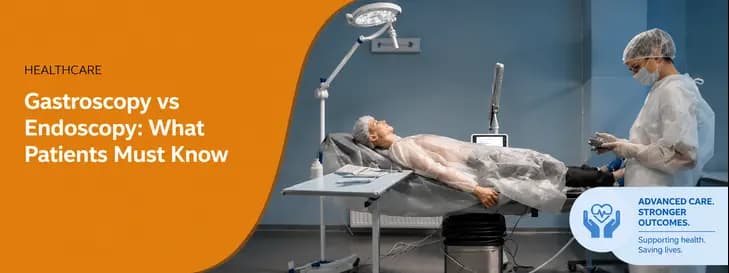

You've been told you need an "endoscopy." Or maybe the word your doctor used was "gastroscopy." Are these the same thing? Different tests? Do you need both? If you've been sitting with that uncertainty, you're not alone, and it's one of the most common questions that patients ask before their first GI procedure.
Here is the short answer: all gastroscopies are endoscopies, but not all endoscopies are gastroscopies.
According to Grand View Research (2025), the global market recorded 191.1 million endoscopy procedures, with gastrointestinal endoscopy accounting for the largest segment.
This article explains the real difference between gastroscopy and endoscopy in plain language, walks you through what each procedure involves, who needs one, and how to prepare, so that by the time you finish reading, there are no unanswered questions.
What Is an Endoscopy?
The word "endoscopy" comes from the Greek: endon (within) and skopein (to look). In medicine, it refers to any procedure where a doctor inserts a thin, flexible tube fitted with a light source and a miniature camera into the body to examine internal organs or cavities directly.
Endoscopy is not a single test; it's a category of tests. Depending on what part of the body is being examined, different names apply:
- Upper GI endoscopy/gastroscopy: Oesophagus, stomach, and duodenum
- Colonoscopy: large intestine (colon) and part of the small intestine
- Sigmoidoscopy: lower portion of the colon
- Bronchoscopy: airways and lungs
- Cystoscopy: urinary bladder
- Capsule endoscopy: entire small intestine (using a swallowed pill-camera)
When a gastroenterologist refers to an "endoscopy" in the context of stomach symptoms, they almost always mean an upper GI endoscopy, which is the same as a gastroscopy. The terms are used interchangeably in clinical practice, which is where the confusion begins.
What Is a Gastroscopy?
A gastroscopy, also called an upper endoscopy or oesophago-gastro-duodenoscopy (OGD), is the specific endoscopic examination of the upper part of your digestive system. It looks at three key areas:
- Oesophagus (food pipe): Checks for inflammation, strictures, Barrett's oesophagus, or varices.
- Stomach: Detects gastric ulcers, H. pylori infection, gastritis, polyps, or early stomach cancer.
- Duodenum: Identifies duodenal ulcers, coeliac disease markers, or unusual bleeding sources.
During a gastroscopy, the doctor can also take tissue biopsies, stop active bleeding with thermal or clip techniques, dilate a narrowed oesophagus, or remove polyps, making it both a diagnostic and therapeutic tool.
When Is a Gastroscopy or Upper Endoscopy Needed?
A gastroscopy is typically recommended when symptoms suggest a problem in the upper digestive tract. Common indications include:
- Persistent heartburn or acid reflux that does not respond to medication
- Unexplained pain in the upper abdomen or epigastric region
- Difficulty or pain while swallowing (dysphagia or odynophagia)
- Unintentional weight loss combined with appetite changes
- Vomiting blood (haematemesis) or passing black, tarry stools
- Iron-deficiency anaemia with no obvious cause
- Surveillance of known conditions like Barrett's oesophagus, gastric polyps, or previous gastric ulcers
- Screening in high-risk populations (family history of gastric cancer, H. pylori infection history)
It is also used intraoperatively during bariatric or sleeve gastrectomy procedures to verify margins, and post-surgically to investigate complications.
Understanding the Difference Between Gastroscopy and Upper Endoscopy
While the terms gastroscopy and upper endoscopy are often used interchangeably, there are subtle distinctions worth understanding.
Gastroscopy specifically refers to examination of the stomach, while upper endoscopy is a broader term that includes examination of the oesophagus, stomach, and duodenum. Both procedures use the same equipment and follow similar protocols. In clinical practice, when your doctor says you need a gastroscopy, they typically mean a complete upper endoscopy that will visualize all three regions.
Some doctors may use the term gastroscopy more specifically when they're focusing primarily on stomach issues, though the entire upper tract is usually examined during the procedure.
Understanding this terminology helps prevent confusion during your consultation. Your doctor will explain exactly which areas they plan to examine and why, based on your specific symptoms or medical concerns.
Preparing for Your Gastroscopy or Endoscopy
Proper preparation is essential for a successful gastroscopy or endoscopy procedure. Your doctor will provide you with detailed written instructions at least one week before your scheduled appointment.
Generally, you will need to fast completely for 6 to 8 hours before the procedure, which means no food, drinks, or even water after midnight (or as instructed by your healthcare team). This fasting period ensures your stomach is empty so the doctor has a clear view of the stomach lining and can work safely.
You may be asked to continue taking certain medications, though some medications need to be stopped temporarily or adjusted.
Blood-thinning medications or anti-inflammatory drugs may require special attention, so inform your doctor about all medications and supplements you're taking. The Mayo Clinic recommends discussing any medical conditions, allergies, or previous adverse reactions to anaesthesia well in advance.
Arrange for someone to drive you home after the procedure, as you'll be sedated and should not operate a vehicle for at least 24 hours.
Diet and Medication Adjustments Before the Procedure
Your doctor will provide specific dietary instructions tailored to your medical history and the type of procedure planned. In the days before your gastroscopy, avoid high-fibre foods, raw vegetables, nuts, and seeds that might not digest completely.
Stick to easily digestible foods like soup, rice, pasta, eggs, and soft cooked vegetables. The evening before the procedure, have a light, early dinner to allow adequate time for digestion.
Some doctors recommend a clear liquid diet starting 24 hours before the appointment, this includes water, clear broth, apple juice, and tea without milk. Avoid red or purple-coloured liquids as they can be mistaken for blood during the examination.
Regarding medications, inform your doctor about all prescriptions, over-the-counter medicines, and supplements you take. Certain medications like aspirin, anti-inflammatory drugs, or blood thinners may need adjustment. Diabetes medications may also need to be modified on the day of the procedure. Never stop prescribed medications without explicit instruction from your healthcare provider.
During the Examination: Step by Step
Once you're in the examination room, you'll lie on your left side on a comfortable table with pillows and blankets to keep you warm. Your throat will be sprayed with a local anaesthetic to help you feel more comfortable and suppress the gag reflex.
The sedation will begin through your IV line, and within moments you'll feel relaxed and drowsy. As you relax, the doctor will gently introduce the endoscope into your mouth and guide it down your oesophagus.
The camera at the tip of the endoscope displays images on a monitor that the doctor watches closely. You may feel gentle pressure and slight discomfort, but the sedation prevents you from experiencing pain.
The doctor takes time to carefully examine the lining of your oesophagus, stomach, and duodenum, looking for any abnormalities, inflammation, or bleeding. If needed, the doctor can take tiny samples (biopsies) or remove polyps during the procedure. Most procedures are completed within 15 to 20 minutes, though some may take longer if treatment is required.


Sedation and Comfort During the Procedure
Sedation during gastroscopy or endoscopy serves two important purposes: it helps you relax and makes the procedure more comfortable. Most procedures use moderate sedation (also called conscious sedation), which keeps you relaxed but allows you to respond to commands.
You'll be awake but unlikely to remember much of the procedure due to the sedation's amnestic effect. Your doctor and nursing team continuously monitor your vital signs including blood pressure, heart rate, oxygen saturation, and breathing throughout the procedure.
If you experience any discomfort or anxiety, inform your medical team, they can adjust sedation levels to enhance your comfort. The National Health Service (NHS) notes that most patients tolerate sedation very well with minimal side effects.
After the procedure, sedation effects wear off gradually over 30 minutes to an hour. You may feel sleepy, dizzy, or have mild throat irritation, which are normal and temporary. Some patients experience brief grogginess, but mental clarity typically returns within a few hours.
What the Doctor Can Accomplish During Endoscopy
Beyond diagnosis, modern endoscopy allows doctors to perform therapeutic procedures that might otherwise require surgery.
If the doctor identifies bleeding ulcers, they can apply treatments to stop the bleeding without an operation.
Polyps can be removed completely during the procedure using specialized instruments. Strictures (narrowed areas) in the oesophagus or stomach can be dilated to restore normal passage of food and liquids.
Tissue samples (biopsies) can be taken to test for infections like Helicobacter pylori or to evaluate suspicious lesions. If food or foreign objects become lodged in the oesophagus or stomach, the endoscope can often retrieve them safely.
In cases of Barrett's oesophagus or dysplasia, the doctor can apply radiofrequency ablation or other techniques to remove abnormal tissue. Variceal bleeding from oesophageal varices can be treated with banding procedures. These therapeutic capabilities often mean patients can avoid more invasive surgical procedures. Your doctor will discuss which interventions, if any, might be appropriate based on what's found during your examination.
After Your Procedure: Recovery and Rest
After your gastroscopy or endoscopy is complete, you'll be moved to a recovery area where nurses monitor you as the sedation wears off. Your vital signs will be checked regularly to ensure everything is stable.
You may feel drowsy, and it's normal to have some mild throat soreness or a hoarse voice for a few hours. Avoid eating or drinking for at least 30 minutes after the procedure to allow any numbness from the local anaesthetic to wear off. When you're ready, you can start with small sips of water, followed by soft foods if your throat feels comfortable.
Complete recovery from sedation typically takes several hours, which is why you shouldn't operate machinery or drive. Rest at home for the remainder of the day if possible. You may resume normal activities the following day unless your doctor advises otherwise. If you had polyp removal or biopsy, your doctor may recommend dietary modifications for a few days. Most people return to their regular routine within 24 hours without any problems.
Possible Risks and When to Seek Help
Gastroscopy and endoscopy are generally very safe procedures with complication rates below 1 percent.
Common, minor side effects include mild throat soreness, bloating, or nausea that resolve within a few hours. More serious but rare complications include perforation (a small tear in the digestive tract), severe bleeding, or pancreatitis following the procedure. Reactions to sedation, though uncommon, can include breathing difficulties or allergic reactions.
The risk increases slightly if therapeutic interventions like polyp removal or tissue ablation are performed. Your age, overall health, and medical conditions may affect your individual risk profile. Contact your doctor immediately if you experience severe or persistent abdominal pain, vomiting blood, black tarry stools, fever above 38.5°C, difficulty breathing, or chest pain after the procedure.
These symptoms require urgent evaluation at a hospital. Minor throat irritation or mild discomfort is normal and doesn't require emergency care, but contact your doctor if symptoms persist beyond 48 hours. Your medical team will have discussed potential risks relevant to your specific situation before the procedure.
Why Patients Across Kerala and the Gulf Choose Meitra Hospital for Gastroscopy and Endoscopy
Choosing the right facility for a gastroscopy or endoscopy matters, not just for comfort, but for diagnostic accuracy, procedural safety, and the range of interventions available if something is found.
Meitra Hospital's Centre for Gastro Sciences in Kozhikode , Kerala, is one of the most comprehensively equipped gastroenterology centres in South India. Here's what sets it apart for patients looking for both quality and affordability:
1. Four Dedicated Endoscopy Suites: Meitra operates four advanced endoscopy suites with mechanised, automated cleaning and recycling machinery. This means that every endoscope used is decontaminated under standardised protocols.
2. Full Spectrum of GI Procedures Under One Roof: The department doesn't just perform basic gastroscopy. Its capabilities span:
- Diagnostic and therapeutic upper GI endoscopy (gastroscopy / OGD)
- Colonoscopy and sigmoidoscopy
- ERCP (Endoscopic Retrograde Cholangiopancreatography) for bile duct and pancreatic conditions
- Endoscopic Ultrasound (EUS) for staging and tissue sampling
- Capsule Endoscopy for small bowel examination, available on an outpatient basis
- Manometry and 24-hour pH monitoring using 24-channel water-perfused high-resolution oesophageal manometry, among the most advanced available in Kerala
- Bariatric endoscopy (intragastric balloon, endoscopic sleeve procedures)
- ERCP for biliary complications and CBD injuries.
3. Round-the-Clock Emergency Endoscopy GI emergencies, haematemesis (vomiting blood), acute upper GI bleeding, do not keep business hours. Meitra provides 24/7 emergency endoscopy services alongside its regular outpatient programme. The department is backed by a dedicated gastro intensive care unit with individual ICU suites, ensuring that complex cases are managed end-to-end on-site.
4. Internationally Benchmarked Care at Affordable Costs Meitra was designed from inception as a quaternary care hospital benchmarked against world-class standards. The concept of the "Hospitel", a hybrid of hospital and hotel infrastructure, ensures that patients, including those travelling from the Gulf states, receive international-quality care in a comfortable environment at costs significantly lower than comparable facilities in the UAE, UK, or Singapore.
For NRI and international patients, the hospital offers dedicated coordination services, helping with travel logistics, accommodation, and seamless appointment scheduling across departments.
Conclusion
Gastroscopy and endoscopy are not rival tests, one is a specific type of the other. A gastroscopy is the upper GI endoscopy your doctor recommends when your symptoms point to the oesophagus, stomach, or duodenum. It is safe, minimally invasive, typically completed in under 15 minutes, and produces diagnostic information that no imaging scan can replicate.
What matters most is where you have it done. Access to a fully equipped endoscopy suite, a trained gastroenterologist, and on-site emergency backup transforms a straightforward diagnostic test into a comprehensive care experience.
Meitra Hospital's Centre for Gastro Sciences offers exactly that, and for patients in Kerala, the Gulf, or anywhere in India seeking trusted, affordable gastroenterology care, it is one of the most complete options available.
If you're experiencing symptoms like persistent abdominal pain, difficulty swallowing, or unexplained digestive issues, our gastroenterology team at Calicut and Kozhikode is ready to help. We offer comprehensive endoscopy and gastroscopy services with experienced specialists committed to your health and comfort.
Also, if you've been putting off investigating persistent heartburn, unexplained abdominal pain, or swallowing difficulties, the most useful thing you can do today is take the first step. Chat with our medical assistant today!