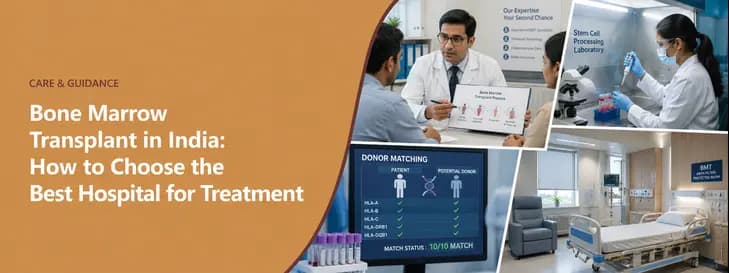

When a doctor tells a patient or family that a bone marrow transplant is needed, the instinct is to ask: Can it be done? What will it cost? The more important question, the one that shapes everything that follows is: Which hospital should do it, and why?
Bone marrow transplantation is not a procedure that a hospital either "does" or "doesn't do." There is an enormous spectrum between a hospital with a shared oncology ward that performs five transplants a year and a dedicated BMT centre with isolating positive-pressure rooms, an experienced multidisciplinary team, and a structured long-term follow-up programme.
The gap in outcomes between these two ends of the spectrum is not marginal, it is the difference between successful engraftment and life-threatening complications.
India has become one of the world's most significant destinations for bone marrow transplantation, attracting patients from across the country and from over 40 countries internationally. With BMT costs ranging from INR 15 lakh to INR 30 lakh, roughly 70–80% less than equivalent care in the United States or United Kingdom.
Whether you are a patient newly diagnosed with leukaemia, a parent researching options for a child with thalassaemia, or an international patient weighing your choices, this guide covers everything you need to know: what BMT is, who it helps, how the procedure works, what recovery looks like, how much it costs in India, and how to choose a centre you can trust.
What Is Bone Marrow Transplantation (BMT)?
Bone marrow is the soft, spongy tissue inside your bones that manufactures blood cells: red cells that carry oxygen, white cells that fight infection, and platelets that help blood clot. When disease, chemotherapy, or a genetic condition destroys the marrow's ability to do this job, a transplant can replace the damaged marrow with healthy, functioning stem cells.
The transplanted stem cells travel through the bloodstream to the bone marrow, settle there, and begin producing healthy blood cells. This process: called engraftment, typically takes two to four weeks and marks the turning point in the patient's recovery.
Conditions treated with Bone Marrow Transplantation (BMT) include:
- Acute myeloid leukaemia (AML) and acute lymphoblastic leukaemia (ALL) Hodgkin's and Non-Hodgkin's lymphoma (relapsed or refractory)
- Multiple myeloma (autologous BMT as standard of care)
- Aplastic anaemia
- Myelodysplastic syndromes (MDS)
- Sickle cell disease and thalassaemia; where BMT can be curative, especially in younger patients
- Severe combined immunodeficiency (SCID) and other inherited immune disorders
Types of Bone Marrow Transplant
Understanding which type of transplant is relevant to your situation is the first question most patients and families have.
1. Autologous BMT
The patient's own stem cells are collected before high-dose chemotherapy, stored, and then re-infused once treatment is complete. Because the cells come from the patient, there is no risk of rejection. This is the standard approach in multiple myeloma and some lymphomas.
2. Allogeneic BMT
Stem cells come from a genetically matched donor; ideally a sibling, or an unrelated donor found through national or international registries. Allogeneic BMT is used in leukaemia, aplastic anaemia, thalassaemia, and other conditions where the patient's own cells cannot be used. An important benefit here is the graft-versus-leukaemia (GvL) effect, where donor immune cells help eliminate residual cancer cells.
3. Haploidentical BMT
When no fully matched donor is available, a half-matched donor; usually a parent, child, or sibling, can be used. Advances in post-transplant cyclophosphamide (PTCy) protocols have made haploidentical transplants much safer and more widely available over the past decade.
4. Cord Blood Transplant
Stem cells collected from umbilical cord blood at birth. Cord blood requires less stringent HLA matching and is a practical option when no adult donor is available, particularly for paediatric patients.
While advances in donor matching and transplant techniques have improved outcomes, patients undergoing allogeneic transplants must still be monitored for certain immune-related complications, the most significant of which is graft-versus-host disease (GVHD).
How Much Does a Bone Marrow Transplant Cost in India?
According to published data from leading Indian hospitals, the total cost of BMT in India ranges from INR 15 L to INR 30 L, depending on the transplant type, hospital facilities, room category, conditioning regimen, and any complications during recovery. Allogeneic transplants tend to cost more than autologous ones, given the added complexity of donor workup, HLA typing, and extended immunosuppression.
For comparison, the same procedure in the United States can cost between USD 100,000 - 300,000 (approximately INR 83 lakh INR 2.5 crore), making India a genuinely cost-effective destination for both domestic and international patients.
What is typically included in the BMT package at reputed Indian centres:
- Pre-transplant workup and donor evaluation
- Conditioning chemotherapy and/or radiation
- Stem cell infusion and early recovery hospitalisation
- Standard supportive medications (antibiotics, antifungals, transfusions)
- Regular post-discharge follow-up consultations
Patients should clarify what is excluded, such as treatment of serious complications like sepsis, GVHD therapy, or extended ICU stays, before finalising any centre.
Also Read: Blood Cancer Treatment in Kerala: Leukaemia, Lymphoma & Myeloma Explained
Choosing the right bone marrow transplant centre can significantly influence treatment outcomes, recovery, and the overall patient experience.


How Do You Choose the Right Bone Marrow Transplant Centre?
A bone marrow transplant is one of the most specialised treatments in modern medicine, requiring advanced infrastructure, strict infection-control protocols, experienced transplant specialists, and comprehensive long-term follow-up care. Evaluating these factors can help patients identify centres that are equipped to manage both routine and complex transplant cases safely and effectively.
When comparing bone marrow transplant hospitals, pay close attention to the following key factors:
Factor 1: Is the BMT Unit Truly Dedicated or Shared?
A dedicated BMT unit is essential because transplant patients are highly vulnerable to infections during recovery.
- HEPA-filtered positive-pressure isolation rooms
- Specialist BMT-trained nursing staff
- 24/7 on-site blood bank and transfusion support
Meitra Hospital's Centre for Blood Diseases, BMT & Cancer Immunotherapy was built specifically around these requirements. It operates as a self-contained centre, not a wing of a general oncology ward, with purpose-built isolation infrastructure, specialist BMT nursing staff, and an integrated blood and transfusion medicine unit on-site.
Factor 2: Transplant Volume and Team Experience
Higher-volume transplant centres generally achieve better outcomes because their teams routinely manage complex transplant-related complications. Ask about:
- Number of BMTs performed annually
- Allogeneic vs autologous transplant experience
- Transplant-related mortality rates
- Median time to engraftment
Meitra has successfully treated complex blood cancer cases with 200+ bone marrow transplants.
Factor 3: Haematologist Credentials and Multidisciplinary Support
Successful transplantation depends on more than a single specialist. The best centres provide coordinated multidisciplinary care. Look for:
- Fellowship-trained transplant haematologists
- Infectious disease specialists
- Dietitians and physiotherapists
- Psychological and social support services
Factor 4: Allogeneic and Haploidentical Transplant Capability
Not all hospitals offer advanced allogeneic transplant programmes. Haploidentical transplantation has expanded donor options for many patients. Ask whether the centre:
- Performs haploidentical transplants regularly
- Uses PTCy-based protocols
- Has experience managing donor-related complications
Factor 5: GVHD Management Protocols
Graft-versus-host disease (GVHD) is one of the most important complications after allogeneic transplantation. Evaluate whether the centre has:
- Established GVHD prevention protocols
- Access to advanced therapies
- Multidisciplinary GVHD follow-up pathways
- Early detection and monitoring systems
Factor 6: Cost Transparency and Inclusions A transplant quote should clearly outline what is included and what may generate additional costs. Confirm coverage for:
- Pre-transplant investigations
- Conditioning treatment
- Blood products and medications
- ICU care and complication management
At Meitra Hospital, patients receive a detailed written cost plan before admission, and the hospital's pricing for the BMT pathway, including transplant-related complications management, is explained clearly at the initial consultation. This matters enormously for families making one of the most consequential financial decisions of their lives.
Factor 7: International Patient Support Services Patients travelling long distances require both clinical excellence and logistical assistance. Look for:
- International patient coordinators
- Visa and travel support
- Accommodation guidance
- Teleconsultation and follow-up services
Meitra Hospital's position in Kozhikode is uniquely advantageous for Gulf and South Asian patients. Kozhikode (Calicut) International Airport has direct non-stop flights from Dubai, Abu Dhabi, Muscat, Doha, Riyadh, Bahrain, and Kuala Lumpur, making Meitra genuinely accessible for patients who might otherwise consider travelling to Mumbai, Chennai, or Hyderabad.
The hospital's Arabic-speaking staff, longstanding relationship with Gulf expatriate communities, and dedicated international patient services team mean that the arrival-to-discharge experience is organised, not improvised.
Also Read: Top Cancer Treatment Hospitals in India (2026 Guide)
Once you know what separates an average transplant programme from an exceptional one, the next step is identifying a centre that consistently meets those standards.
Why Is Meitra Hospital a Leading Choice for Bone Marrow Transplant in Kerala?
Meitra Hospital's Centre for Blood Diseases, BMT & Cancer Immunotherapy combines specialised transplant expertise, dedicated infrastructure, and comprehensive multidisciplinary support under one roof. For patients from Kerala, across India, and abroad, it offers a complete transplant ecosystem designed around safety, outcomes, and long-term recovery.
Key reasons patients choose Meitra Hospital:
- Dedicated BMT unit with specialised isolation facilities and transplant-trained nursing teams
- Expertise in autologous, allogeneic, and haploidentical bone marrow transplants
- Multidisciplinary care involving haematologists, infectious disease specialists, nutritionists, physiotherapists, and counsellors
- Transparent treatment planning and cost discussions
- Strong international patient services with support for Gulf and overseas patients
- Access to advanced critical care and multiple medical specialities within the same hospital
Looking for expert guidance on bone marrow transplantation? Schedule a consultation with Meitra Hospital's BMT specialists to discuss your treatment options and transplant journey.
Conclusion
Choosing the right bone marrow transplant hospital in India is not simply a matter of finding the lowest quote or the most recognised brand name. It is a clinical decision with life-or-death implications, and it requires asking specific, direct questions about infrastructure, team expertise, transplant volume, GVHD protocols, and cost transparency.
For patients in Kerala, patients from across India, and international patients from the Gulf and South Asia, Meitra Hospital's Centre for Blood Diseases, BMT & Cancer Immunotherapy in Kozhikode provides a rare combination: dedicated BMT infrastructure, specialist haematology expertise, transparent affordable pricing, and an international patient support system designed for patients making one of the most important healthcare journeys of their lives.
The first step is a specialist consultation, in person in Kozhikode, or via teleconsultation if you are arriving from outside Kerala or from abroad. Our medical support team is available 24 hours a day, in English, Malayalam, and Arabic. Chat with our assistant today on Whatsapp to get your consultation.
Medical Disclaimer This article is for informational purposes only and does not constitute medical advice. Bone marrow transplantation is a complex medical procedure with significant risks. All treatment decisions should be made in consultation with qualified haematologists and transplant specialists based on individual clinical assessment. The information provided is general in nature and may not apply to every patient's situation. Always seek the advice of your physician or other qualified health provider before beginning any medical treatment.