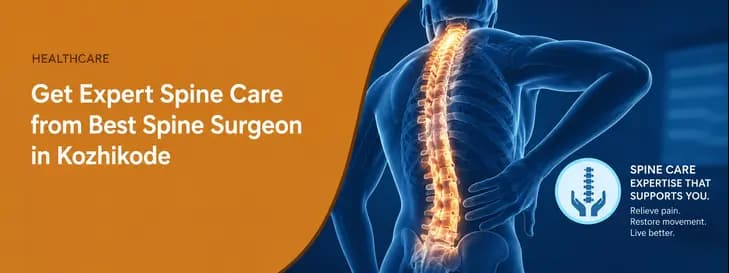

Most people have experienced back pain. A bad night's sleep, a long drive, lifting something heavy, the pain comes, and usually it goes. For millions of people across India, however, back pain is the beginning of something that doesn't resolve on its own, and that gets progressively harder to treat the longer it's left unaddressed.
According to a 2025 retrospective study across 85 healthcare centres in India, low back pain prevalence reached 22.63%, the highest recorded figure in a five-year study period, with women making up over 67% of affected patients.
The specialist infrastructure to manage that burden has not kept pace in most parts of India, particularly in regional centres outside the major metros. Kozhikode is the exception. Over the last decade, Meitra Hospital has built a dedicated, multi-specialist spine programme within its Centre for Excellence in Bone, Joint and Spine, one that covers the full clinical spectrum from conservative management and targeted injections to advanced endoscopic surgery and complex deformity correction.
This article explains everything you need to know about spine conditions, when surgery is and isn't necessary, what the latest surgical techniques involve, and how Meitra's team approaches every category of spinal disease.
The Human Spine: Anatomy, Function, and Common Spine Disorders
Before diving into conditions and treatments, it helps to understand what the spine actually is, because most patients arrive at a spine surgeon's clinic with imaging but very little anatomical context for what they're looking at.
The spine is made up of 33 vertebrae arranged in five regions:
- Cervical (C1–C7): The neck. Houses the spinal cord and the nerve roots that supply the arms and hands.
- Thoracic (T1–T12): The mid-back, attached to the rib cage. Less mobile than the neck and lower back, hence less prone to disc herniation, but a common site for deformity (kyphosis) and spinal TB.
- Lumbar (L1–L5): The lower back. Bears the most mechanical load, which is why the vast majority of disc herniations and stenosis occur here.
- Sacral (S1–S5): Fused into the sacrum, connecting the spine to the pelvis.
- Coccygeal: The tailbone.
Between each vertebra sits an intervertebral disc, a shock absorber with a tough outer ring (annulus fibrosus) and a soft inner core (nucleus pulposus). When the outer ring weakens or tears, the inner core can push out, pressing on adjacent nerve roots. This is what most people mean when they say "slipped disc."
Alongside the discs, the spinal canal houses the spinal cord and, below L1, a bundle of nerve roots called the cauda equina. Compression of these structures, whether by disc material, bone spurs, thickened ligaments, or tumour, causes the radiating pain, numbness, and weakness that bring most patients to a spine clinic.
Understanding this anatomy helps patients make sense of their MRI reports and participate meaningfully in discussions with their surgeon.
Common Spine Conditions: What Brings Patients to a Specialist
Spine problems can range from mild discomfort to conditions that affect mobility, nerve function, and daily quality of life. Understanding the most common conditions helps identify when specialist evaluation and advanced treatment may be needed.
1. Lumbar Disc Herniation (Slipped Disc)
The most common surgically treated spine condition. The nucleus pulposus protrudes through a tear in the annulus, pressing on a lumbar nerve root. Classic presentation: lower back pain radiating into the buttock, back of the thigh, and foot (sciatica). Coughing, sneezing, or prolonged sitting typically worsens symptoms.
Who gets it: Most commonly affects adults aged 30–50. Physical labour, prolonged sitting, and smoking are risk factors.
Treatment path: Most cases resolve with 6–12 weeks of physiotherapy, NSAIDs, and activity modification. Epidural steroid injections can provide interim relief. Surgery (endoscopic or microdiscectomy) is considered when conservative treatment fails or neurological symptoms progress.
2. Cervical Disc Disease
Disc degeneration or herniation in the neck (C4–C7 most commonly) compresses nerve roots or the spinal cord itself. Nerve root compression causes radiating arm pain, tingling, and weakness (cervical radiculopathy). Cord compression (cervical myelopathy) causes gait difficulty, hand clumsiness, and bladder urgency and is a more urgent surgical condition.
Common misdiagnosis: Shoulder impingement, carpal tunnel syndrome, or "stress." Arm symptoms from cervical disc disease are often treated at the shoulder or wrist for months before an MRI establishes the actual source.
3. Lumbar Spinal Stenosis
Age-related narrowing of the spinal canal due to a combination of disc bulging, bone spur formation, and ligamentum flavum thickening. Compresses multiple nerve roots simultaneously. Characteristic symptom: neurogenic claudication, leg pain and weakness that comes on after walking a certain distance and is relieved by sitting, bending forward, or resting. Often confused with vascular claudication (arterial insufficiency), which has a different treatment pathway.
Who gets it: Typically adults over 55. Very common in the Gulf returnee population due to years of physical labour.
4. Spondylolisthesis
One vertebra slips forward over the one below it. Can be:
- Degenerative: Age-related disc and facet joint wear causing instability. Most common in women over 50 at L4–L5.
- Isthmic: A stress fracture of the pars interarticularis, often seen in adolescent athletes or adults with a history of gymnastics or heavy lifting.
Symptoms range from chronic low back pain to severe sciatica, depending on the degree of slip and nerve involvement. Mild grades often respond to physiotherapy and core strengthening. Significant slippage with symptoms usually requires stabilisation surgery (fusion).
5. Spinal Tuberculosis (Pott's Disease)
Remains highly relevant in Kerala and among the Gulf-resident Malayali community. Mycobacterium tuberculosis seeds the vertebrae from a primary pulmonary focus, causing vertebral destruction, cold abscess formation, and if untreated, kyphotic deformity ("gibbus") and paralysis.
Early Pott's disease responds to standard anti-TB chemotherapy. Surgical indications include neurological compromise, instability, failure of medical therapy, or diagnostic uncertainty. Dr. Nikhil KV at Meitra has published on the surgical management of spinal TB in the ASSI Monographs.
6. Scoliosis
Abnormal lateral curvature of the spine, often combined with rotation of the vertebrae. Two main types managed at Meitra's dedicated Scoliosis Clinic:
-
Adolescent Idiopathic Scoliosis (AIS): The most common form, typically detected in girls aged 10–16. Curves under 25° are monitored; 25–45° are managed with bracing; curves over 45° with documented progression typically require surgical correction.
-
Adult Degenerative Scoliosis: Develops in adults over 50 as disc and facet degeneration causes asymmetric collapse. Often presents with back pain, leg pain, and progressive deformity.
7. Spinal Fractures and Trauma
Vertebral fractures from road accidents, falls, or osteoporosis require urgent assessment. Stable fractures in neurologically intact patients are often managed with bracing and analgesia. Burst fractures with canal compromise, or fractures with neurological deficit, require urgent surgical stabilisation.
8. Failed Back Surgery Syndrome (FBSS)
A significant subset of patients referred to Meitra have previously undergone spine surgery, elsewhere in Kerala or abroad and continue to experience pain. FBSS has multiple causes: inadequate initial decompression, wrong-level surgery, adjacent segment disease after fusion, scar tissue formation, or psychological factors.
Managing revision spine surgery requires considerable experience and careful pre-operative workup. The depth of the senior team at Meitra, particularly Dr. George Abraham's volume and experience is directly relevant here.


When Does Back Pain Need a Spine Specialist?
This is the most common question patients ask, and the most common mistake made is waiting too long to get the answer.
See a spine specialist (not just a general doctor) when:
- Pain persists beyond 6–8 weeks despite standard treatment
- Pain radiates from the back into the leg, arm, or around the chest
- Numbness, tingling, or weakness appears in the limbs
- You notice difficulty walking, poor balance, or clumsiness with fine hand movements
- Bladder or bowel function changes, this is an emergency (cauda equina syndrome)
- You've had a fall or road accident with back pain
- You have a known history of cancer and develop back pain
- You're losing weight unexpectedly alongside back pain (possible infection or tumour)
- You're over 60 with new-onset severe back pain (risk of osteoporotic fracture)
- An MRI already shows disc herniation, stenosis, or spondylolisthesis and you're unsure what to do
None of the above necessarily means you need surgery. It means you need a qualified opinion.
Conservative Treatment First: What Happens Before Surgery Is Considered
The spine surgery literature is consistent: most conditions are best managed conservatively before surgery is considered. At Meitra, this pathway is structured and supported by a multi-disciplinary team.
1. Physiotherapy and Core Rehabilitation
The cornerstone of non-surgical spine management. A structured programme targets core muscle strength, postural correction, and nerve mobilisation. Meitra's dedicated Physical Therapy and PM&R departments provide supervised programmes, not just a sheet of exercises.
2. Medications
NSAIDs reduce inflammation; muscle relaxants address spasm; neuropathic pain agents (pregabalin, duloxetine) address nerve root pain. Short-term use is generally effective; long-term dependency, especially on opioids is something Meitra's pain management team actively works to avoid.
3. Spinal Injections
Meitra's Anaesthesiology and Pain Management department offers the full range of interventional pain procedures:
- Epidural steroid injections: Targeted delivery of anti-inflammatory medication to the affected nerve root. Effective for patients with disc herniation-related radiculopathy.
- Selective nerve root blocks: Diagnostic and therapeutic, confirms the specific nerve root causing symptoms.
- Facet joint injections: For back pain arising from facet arthritis rather than disc pathology.
- Radiofrequency ablation (RFA): For longer-term facet pain control.
These procedures are guided by fluoroscopy or CT, ensuring precision placement rather than blind injection.
Spine Surgery at Meitra: Techniques, Technology & When They’re Used
When spine surgery is required, the approach depends on the condition, severity, patient factors, and the surgeon’s expertise. Meitra offers advanced spine procedures using minimally invasive and technology-assisted techniques.
1. Endoscopic Spine Surgery
Endoscopic techniques are among the biggest advancements in modern spine care. Meitra offers both:
-
Full Endoscopic (Uniportal) Spine Surgery A small 8–10 mm access channel with a high-definition camera allows surgeons to remove disc material or decompress nerves with minimal muscle disruption. Used for: Disc herniation, foraminal stenosis, and selected cervical or lumbar spine conditions.
-
Unilateral Biportal Endoscopic (UBE) Surgery Using separate portals for the camera and instruments, UBE provides greater flexibility while maintaining a minimally invasive approach. Used for: Lumbar canal stenosis, disc herniation, and nerve decompression.
Dr. Nikhil KV at Meitra has specialised international training in both full endoscopic techniques (Germany) and UBE surgery (South Korea).
2. Minimally Invasive Spinal Fusion (MIS-TLIF / MIS-PLIF)
For conditions involving spinal instability, minimally invasive fusion uses smaller incisions with advanced imaging guidance. Used for: Spondylolisthesis, unstable degenerative disc disease, and recurrent disc problems.
3. Microsurgical Discectomy & Laminectomy
Precision microscope-assisted procedures used when larger decompression is needed or endoscopic approaches are not suitable.
4. Complex Spine Procedures
Severe deformities, spinal fractures, and tumours may require advanced stabilisation and reconstruction with specialised surgical planning.
5. O-Arm Technology: Enhancing Surgical Precision
Meitra uses O-arm intraoperative 3D imaging for complex spine surgeries. It provides CT-quality images during surgery, helping surgeons confirm implant placement, assess decompression, and improve procedural accuracy before completion.
Meitra is the only hospital in North Kerala with this facility integrated into its spine surgical programme.
Why Patients Choose Meitra: The Institutional Case
Meitra is frequently described, accurately, as the most technically equipped hospital for spine care in North Kerala. But "best equipped" is a claim many hospitals make. Here's what makes it verifiable:
-
JCI, NABH, NABL, and Green OT accreditation: Each requires independent clinical audit. JCI in particular is the international standard applied to leading hospitals globally, and is a key criterion for Gulf patients evaluating Indian hospitals.
-
Active academic training programmes: Meitra's DNB and FNB Spine Surgery programmes mean the institution is regularly assessed by the National Board of Examinations for training standards, patient volumes, case complexity, and clinical outcomes. Hospitals that train surgeons are, structurally, held to a higher standard.
-
25% international patient share: Approximately one in four Meitra patients arrives through medical tourism. For a hospital in a regional city, this is an unusual and meaningful figure.
-
Integrated care model: Orthopaedics, neurosurgery, pain management, physiotherapy, and rehabilitation are co-located, not separate outpatient departments across the city. For patients with complex spine problems, this coordination directly improves outcomes.
Meitra for Outstation and International Patients
For Indian patients travelling from outside Kerala, Meitra provides all-inclusive surgical packages, covering consultation, diagnostics, surgery, anaesthesia, and inpatient rehabilitation, at costs significantly below equivalent care in Mumbai, Chennai, or Delhi, with no compromise in surgical standards or implant quality.
For international patients from the Gulf, Meitra's International Patient Services division handles:
- Medical visa invitation letters
- Airport transfers and accommodation support
- Arabic language assistance throughout the care journey
- A dedicated international floor with Halal India Certification
- Pre-arrival WhatsApp consultation for preliminary assessment
Kozhikode International Airport has direct connections to Dubai, Abu Dhabi, Muscat, Doha, Riyadh, Sharjah, and Kuwait City, making the logistics simpler than flying to a major Indian metro.
Conclusion
Back pain that doesn't resolve, MRI findings you don't understand, sciatica that's stopped you from working, or a diagnosis of scoliosis that's been sitting on a report for six months, these are all reasons to seek a specialist consultation, not reasons to wait.
The value of a well-structured spine programme isn't just the surgeons, it's the combination of accurate diagnosis, staged conservative management, precise surgical decision-making, and supported rehabilitation.
Meitra Hospital's spine unit in Kozhikode brings all of these together under one roof, with a team whose collective experience spans three decades, international fellowships, 12 peer-reviewed publications, and academic training responsibilities that hold the entire unit to a higher standard.
Whether you need conservative management, an injection, an endoscopic discectomy, or a more complex surgical procedure, the first step is the same: a proper clinical consultation with a specialist who has the depth to tell you exactly what your spine needs.
Book a consultation at Meitra today!
Medical Disclaimer This article is for general informational purposes only and does not constitute medical advice, a clinical diagnosis, or a treatment recommendation. All spine treatment decisions must be made following a thorough evaluation by a qualified spine specialist based on your individual symptoms, history, and imaging. In cases of sudden limb weakness, loss of bladder or bowel control, or rapidly worsening neurological symptoms, seek emergency medical attention immediately.