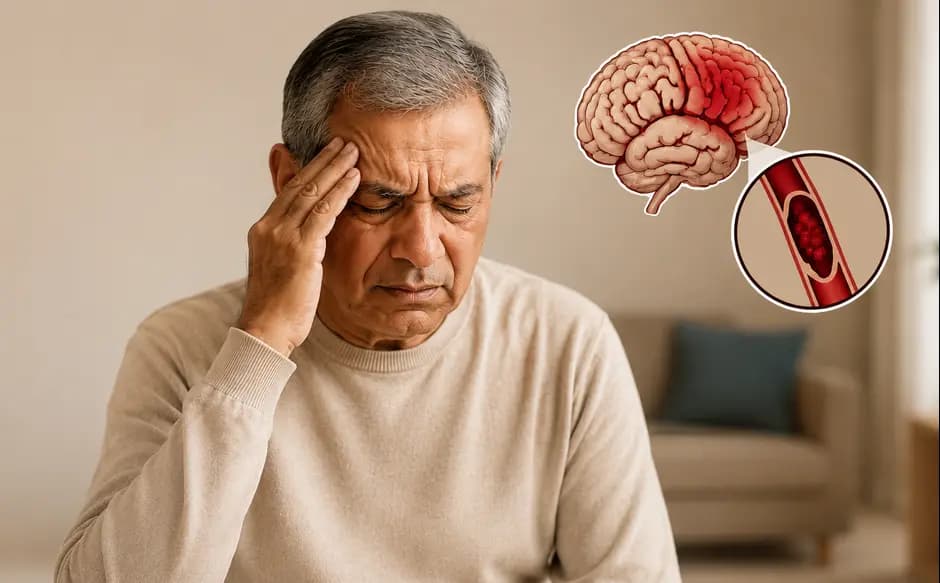

Epilepsy is more than recurring seizures, it can disrupt education, employment, independence, and everyday life. Yet for many people with drug-resistant epilepsy, effective treatment options remain underutilised.
According to a landmark study published in Neurology India, only 2 in 1,000 eligible patients in India currently undergo epilepsy surgery, a staggering treatment gap for a condition that affects an estimated 12 million Indians
This article explains when epilepsy surgery is considered, how the evaluation and treatment process works, expected outcomes, costs, and the factors to consider when choosing an epilepsy surgery hospital in India. We also explore leading centres, including the Advanced Epilepsy Centre at Meitra Hospital, which offers specialised evaluation and surgical care for complex epilepsy cases.
What Does "Drug-Resistant Epilepsy" Actually Mean?
Drug-resistant epilepsy (DRE) is a specific medical term used when seizures continue despite appropriate treatment. According to the International League Against Epilepsy (ILAE), a patient is considered to have drug-resistant epilepsy when two suitably chosen and adequately dosed anti-seizure medications (AEDs) have failed to achieve sustained seizure freedom.
This distinction is important because it signals that simply trying more medications may not be the most effective long-term strategy. For many patients, DRE affects far more than physical health. Common challenges include:
- Frequent seizures, often occurring multiple times per week
- Loss of driving privileges and reduced independence
- Difficulty maintaining employment or education
- Anxiety, depression, and fear of unpredictable seizures
- Social isolation and reduced quality of life
Perhaps the most important fact is that after two well-chosen medications have failed, the likelihood of achieving complete seizure control with additional drug trials falls dramatically. At this stage, a comprehensive evaluation for epilepsy surgery or other advanced therapies may offer a more effective path toward long-term seizure control.
If medications are no longer providing meaningful seizure control, the next question becomes whether surgery is a realistic option.
Is Epilepsy Surgery Right for You? (Who Qualifies)
Not every person with epilepsy requires Epilepsy surgery, but many patients with drug-resistant epilepsy may be candidates without realising it. The goal is to identify whether seizures originate from a specific area of the brain that can be safely treated without causing significant neurological deficits.
Patients are most likely to qualify when they have:
- Focal epilepsy, where seizures arise from a defined region of the brain
- EEG findings that consistently identify the seizure focus
- MRI evidence of a treatable lesion, such as: -- Hippocampal sclerosis -- Cortical dysplasia -- Certain benign brain tumours -- Other structural abnormalities linked to seizures
Surgery can be beneficial at almost any age. In children, earlier intervention may help prevent learning difficulties and developmental delays caused by ongoing seizures.
However, some patients may not be suitable candidates, including those with:
- Seizures that cannot be localised to a specific brain region
- Active, uncontrolled psychiatric conditions
- Serious medical illnesses that increase surgical risk
Once a patient is identified as a surgical candidate, the next step is determining which procedure offers the best balance of seizure control and safety. Modern epilepsy surgery is not a single operation but a spectrum of highly specialised treatments tailored to the patient's seizure type, brain anatomy, and overall health.
Types of Epilepsy Surgery Available in India
Epilepsy surgery has evolved significantly over the past two decades. Today, leading epilepsy centres in India offer both traditional surgical procedures and advanced minimally invasive techniques. The choice depends on where seizures originate, how they spread, and whether the affected brain tissue can be safely treated.
1. Resective Surgery (Temporal Lobectomy and Lesionectomy)
The most established form of epilepsy surgery, resective procedures involve removing the specific brain tissue responsible for seizures. For temporal lobe epilepsy, this approach offers some of the highest success rates, with approximately 60–80% of patients achieving long-term seizure freedom.
2. Stereo-EEG (SEEG)-Guided Surgery
SEEG uses thin electrodes placed through small openings in the skull to precisely map seizure activity deep within the brain. Many advanced centres now use robotic assistance to improve accuracy before planning definitive surgery.
3. Laser Interstitial Thermal Therapy (LITT)
LITT is a minimally invasive "keyhole" procedure that uses laser energy to destroy seizure-causing tissue. Because it avoids a traditional open craniotomy, patients often experience shorter hospital stays and faster recovery.
4. Corpus Callosotomy
This procedure disconnects pathways between the brain's two hemispheres to prevent seizure spread. It is primarily used for severe drop attacks and is considered a palliative rather than curative treatment.
5. Hemispherectomy and Hemispherotomy
Reserved mainly for children with severe epilepsy arising from one extensively damaged hemisphere, these procedures can provide excellent seizure control. Remarkably, young brains often adapt and reorganise functions over time.
6. Deep Brain Stimulation (DBS)
For patients whose seizure focus cannot be safely removed, DBS offers another option. An implanted device delivers targeted electrical stimulation to specific brain regions, helping reduce seizure frequency.
7. Vagus Nerve Stimulation (VNS)
VNS involves implanting a small device that stimulates the vagus nerve in the neck. While it typically does not eliminate seizures completely, many patients experience a 50% or greater reduction in seizure frequency, making it a valuable adjunct therapy.
For many families, the decision is not just whether to undergo epilepsy surgery, but where to have it performed.


The Epilepsy Surgery Process in India: Step by Step
Understanding the process helps you plan realistically, both medically and financially.
Step 1: Pre-surgical evaluation.
This is the stage most patients underestimate, both in duration and cost. The evaluation determines where the seizures are coming from and whether that area can be safely removed. It is broken into tiers of complexity:
Simple evaluation (for clear-cut cases with a visible MRI lesion): includes 3T high-resolution MRI (INR 12K), PET-MRI fusion (INR15K), Video-EEG monitoring for 3 days (INR90K at INR 30K/day), functional MRI (INR 12K), and neuropsychological assessment (INR 6K). Total: approximately INR 1.35–1.5 lakh.
Very complex evaluation: Stereo-EEG (SEEG): required in roughly 1 in 10 cases, where non-invasive tests cannot precisely localise the seizure focus. Fine electrodes are placed inside the brain through small drill-holes, without opening the skull. The electrode cost alone runs INR 40K per electrode (average 5 needed), plus the procedure (INR 1.5 lakh) and monitoring. This is the most powerful technique available, it can identify a seizure focus as small as 1 cubic centimetre.
Step 2: The surgery itself.
Mostly allsurgical candidates eventually have one of two procedures: Resective surgery (removal of the seizure-generating brain area), the most common type, with the highest success rates. Cost in India: approximately INR 2.5–4.5 lakh for the surgical hospitalisation.
Vagus Nerve Stimulator (VNS) implantation, a palliative device for patients who are not resection candidates, which reduces seizure frequency over time. Device cost is the main driver; total cost is higher than resective surgery.
Other procedures, corpus callosotomy, hemispherotomy, Deep Brain Stimulation (DBS), Laser Interstitial Thermal Therapy (LITT), are available at specialist centres for specific indications.
Why Are Patients Choosing India for Epilepsy Surgery?
India has become one of the most sought-after destinations for epilepsy surgery, combining advanced medical expertise with significantly lower treatment costs than many Western countries.
One of the biggest advantages is affordability. Depending on the procedure and hospital, The total cost of epilepsy surgery in India, evaluation plus surgery, ranges from INR 2 lakh to INR 6 lakh (approximately USD 2400 - USD 7,250), depending entirely on what evaluation tier is needed and which surgery is performed.
Beyond cost, leading Indian epilepsy centres offer technology that matches international standards, including:
- SEEG-based epilepsy mapping systems
- High-resolution 3T MRI and PET imaging
- Advanced neuronavigation platforms
- Intraoperative neurophysiological monitoring
- Minimally invasive epilepsy surgery techniques
India's reputation is also supported by highly trained specialists. Many epilepsy neurosurgeons and neurologists have completed fellowships or advanced training in the USA, UK, Germany, and other global centres of excellence while contributing to international research and scientific publications.
For patients from the Gulf region, South India, particularly Kerala, offers additional advantages:
- Short travel times from UAE, Oman, Qatar, Bahrain, and Kuwait
- Familiar cultural environment and multilingual support
- Halal dietary options and patient-friendly accommodation assistance
- Dedicated international patient coordinators
When evaluating hospitals, patients often look for recognised quality standards such as NABH and JCI accreditation, both of which are widely accepted indicators of healthcare quality, patient safety, and clinical governance.
Meitra Hospital's Advanced Epilepsy Centre, Kozhikode
For patients in North Kerala, Malabar, and Gulf NRI families, the question isn't just where in India but whether there is a credible specialist option closer to home. The answer, for epilepsy surgery, is yes.
Meitra Hospital's Advanced Epilepsy Centre is a dedicated Level-4 epilepsy clinic, the highest designation for comprehensive epilepsy care, and one of the only such units in Malabar.
Level-4 means the centre handles the full clinical spectrum: outpatient diagnosis, inpatient Video-EEG monitoring, complex pre-surgical evaluation, all surgical modalities including DBS, and post-operative rehabilitation.
The specialist team brings together expertise that most patients would otherwise need to travel to Chennai or Bengaluru to access:
- Dr. Sachin Sureshbabu: Neurologist with 18+ years of experience, AIIMS-trained, Fellowship in Epilepsy from Fortis Malar Chennai, over 80 published research papers, with focused clinical interest in epilepsy, Parkinson's, and sleep medicine.
- Dr. Tushar V.P: Gold-medal neurologist, DM Neurology, post-doctoral epilepsy fellowship, with additional clinical training in epilepsy from Cleveland, USA.
- Dr. Rajeev M. Parambil: Head of Neurosurgery, 25+ years of experience, MCh Neurosurgery from University of Calicut, stereotactic surgery training from Park City Medical Centre, Malaysia.
Diagnostics and infrastructure at Meitra's Centre for Excellence in Neurosciences include PET imaging, high-resolution intraoperative CT, intraoperative EEG, and 3T MRI, the same toolkit used at top epilepsy centres across the country. The hospital has also launched a dedicated Deep Brain Stimulation (DBS) Programme for refractory epilepsy and movement disorders, a facility rare in Kerala.
For international and NRI patients: Meitra holds JCI accreditation (the first hospital in Malabar to achieve this), alongside NABH and NABL certification. A dedicated international patient floor offers Halal-certified dietary services, multilingual patient coordinators, and assistance with medical visas and travel logistics. Calicut International Airport (CCJ) has direct connections from Dubai, Abu Dhabi, Sharjah, Doha, Muscat, and Riyadh, making Meitra genuinely accessible for Gulf families without the transit complexity of reaching a metro city.
For national patients, Meitra offers the same specialist epilepsy care available at major Indian hospitals, at cost-effective rates, in a hospital that is already familiar to families across Kerala and Malabar.
To speak directly with Meitra's Epilepsy team, chat with our medical assistant today.
Conclusion
Epilepsy surgery remains one of the most underused but genuinely transformative treatments in neurology. For patients who have spent years cycling through medications without relief, a proper pre-surgical evaluation is not a last resort, it is the clinically recommended next step, one that far too few eligible patients in India have yet taken.
India's specialist epilepsy centres now offer the same diagnostic and surgical technology as leading Western hospitals, at a fraction of the cost. For patients across India and Gulf NRI families, that combination, subspecialty expertise, advanced infrastructure, and accessible cost, has made India a credible destination for definitive epilepsy care.
If you or a family member has drug-resistant epilepsy, the first step is a specialist consultation at a Level-3 or Level-4 epilepsy centre, where the full pre-surgical evaluation process, not just a medication review, can determine whether surgery is right for you.
Have questions about epilepsy treatment at Meitra? Our patient coordinators are available whether you're from Kozhikode, another part of Kerala, or reaching us from the Gulf. click here to connect instantly.
Medical Disclaimer: This article is intended for general informational and educational purposes only. It does not constitute medical advice and does not replace a consultation with a qualified neurologist or neurosurgeon. Epilepsy is a complex neurological condition; all treatment decisions require individualised evaluation by a specialist. If you or a family member experiences recurrent seizures, please consult a licensed medical professional. Meitra Hospital's epilepsy specialists are available for consultations, please reach out through the official website at meitra.com.