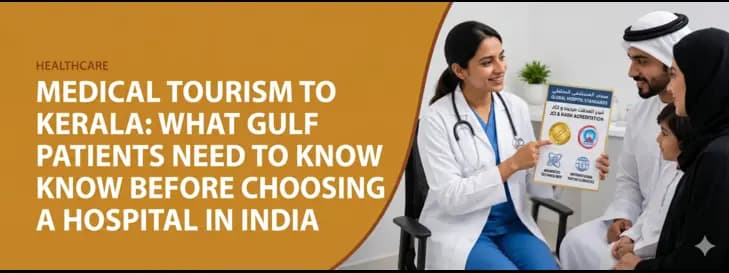

Every year, tens of thousands of patients from the Gulf, Oman, UAE, Saudi Arabia, Kuwait, Bahrain, board flights to India not for leisure, but for life-changing medical treatment. The reason is rarely just cost, although cost matters. It is a combination of shorter wait times, specialist expertise that is genuinely difficult to access locally, and a growing network of Indian hospitals that have deliberately built infrastructure to serve international patients.
India's medical tourism market was valued at approximately $7.69 billion in 2024, with an estimated $16.21 billion medical tourists visiting the country by 2030. Within this national picture, Kerala has carved out a specific and increasingly important role, particularly for patients arriving from the Arabian Gulf.
This article is written for Gulf patients and their families who are genuinely considering medical treatment in Kerala. It covers what to look for in a hospital, how accreditation works, and what the patient journey typically looks like.
Why Kerala, Specifically?
India has several major healthcare hubs, including Chennai, Mumbai, Delhi, and Hyderabad. Yet Kerala continues to attract a growing number of Gulf patients for reasons that extend beyond treatment costs alone.
1. Proximity and Direct Connectivity
Kerala offers some of the strongest air links to the Gulf region. Cities such as Kozhikode, Kochi, and Thiruvananthapuram have regular direct flights from Dubai, Abu Dhabi, Muscat, Doha, and Riyadh. For many patients in Oman or the UAE, travel time can be under two hours, often faster than reaching larger Indian metros.
2. Cultural Familiarity and Patient Comfort
With over two million Malayalis living across Gulf countries, many patients already share personal or family connections with Kerala. Hospitals have adapted with Arabic-speaking coordinators, halal meal options, prayer facilities, and staff familiar with Gulf customs, creating a more comfortable experience for international families.
3. Advanced Care Close to Home
Kerala has a high concentration of specialist physicians and internationally benchmarked hospitals. Many institutions have adopted global standards and accreditations, strengthening their ability to deliver care comparable to larger medical cities.
4. Affordable Care Without Hidden Trade-offs
Major treatments, including cardiac procedures, oncology care, orthopaedics, and transplants, often cost significantly less than in many Gulf countries and Western healthcare systems. Kerala also offers lower expenses for accommodation, nursing support, and recovery care, reducing the overall financial burden of treatment.
As treatment options become clearer, one important factor often separates a good hospital from a trusted one: internationally recognised quality standards.
Hospital Accreditations Explained: A Gulf Patient’s Guide to Choosing Trusted Care
When researching hospitals in India, Gulf patients will frequently come across two key accreditation systems. Understanding what they represent can help narrow choices with greater confidence.
JCI (Joint Commission International)
JCI is the international division of the US-based Joint Commission and is considered one of the most recognised global healthcare benchmarks. Hospitals are assessed on patient safety, clinical quality, staff qualifications, governance practices, and operational standards. For international patients, JCI accreditation often carries additional value because it is widely recognised by insurers across GCC countries.
NABH (National Accreditation Board for Hospitals)
NABH is India’s national healthcare accreditation framework and aligns closely with international quality standards. It plays an important role in hospital quality assessment and is frequently linked to government empanelment, insurance approvals, and institutional credibility within India.
While accessibility and quality standards matter, treatment decisions ultimately come down to one question: what types of care are patients actually travelling for?
The Most Common Procedures Gulf Patients Travel to Kerala For
While Kerala attracts international patients across multiple specialties, a few treatment areas consistently account for a large share of medical travel from the Gulf. The combination of specialist expertise, modern facilities, shorter waiting periods, and cost advantages makes these services particularly sought after.
Some of the most common treatment categories include:
- Cardiac Care: Bypass surgery, angioplasty, valve procedures, and complex heart treatments remain among the leading reasons patients travel.
- Orthopaedics: Joint replacements, spine procedures, and advanced rehabilitation services continue to see strong demand.
- Cancer Care: Patients frequently seek medical oncology, radiation therapy, surgical oncology, and advanced cancer diagnostics.
- Organ Transplants: Liver, kidney, and other transplant services draw patients looking for comprehensive care pathways.
- Other Specialties: Fertility treatments, neurology procedures, and minimally invasive surgeries are also increasingly common.
Once treatment decisions are made, the next concern for many families is understanding how the process actually works from consultation to returning home.


The Patient Journey: From Gulf to Kerala, Step by Step
For first-time medical travellers, the process may seem complicated, but hospitals with dedicated international programmes typically follow a structured and patient-friendly pathway.
Before Travel: Start With a Remote Consultation
The journey usually begins with a teleconsultation where patients can share reports, scans, and medical records digitally. This helps specialists provide:
- A provisional diagnosis and treatment recommendation
- Estimated treatment costs
- Expected duration of stay
- Required documents before travel
This step helps avoid delays, incomplete records, and unexpected changes after arrival.
Planning and Treatment Support
Once travel is confirmed, hospitals often assist with key logistics:
- Medical visa guidance and documentation support
- Airport pickup and accommodation coordination
- Language assistance and patient coordinators
- Culturally familiar services, including halal meals and prayer facilities
Discharge Planning and Post-Treatment Support
Discharge at a well-run international patient programme includes a detailed written discharge summary in English (available in Arabic translation on request), a follow-up medication list, wound care instructions, a post-treatment dietary guide, and a point of contact for telemedicine follow-up after the patient returns to the Gulf.
Meitra provides remote follow-up consultations, allowing the treating specialist to review recovery progress, interpret lab results, and adjust medication remotely. This is particularly valuable for Gulf patients who cannot easily return for follow-up but need ongoing clinical oversight.
After understanding the journey, one final question remains: which hospital can bring together clinical expertise, international support, and a seamless experience under one roof?
Why Meitra Hospital Is the Right Starting Point for Gulf Patients in North Kerala?
For Gulf patients seeking care in North Kerala, Meitra hospital stands out not only for its medical capabilities but also for its ability to support complex international patient journeys. Key differentiators include:
- Internationally Benchmarked Quality: Meitra is the only JCI-accredited hospital in the Malabar region and also holds NABH, NABL, and Green OT certifications, reflecting globally aligned quality and safety standards.
- Advanced Quaternary Care: Equipped to manage highly complex cases including multi-organ transplants, advanced cardiac procedures, cancer care, and neurological conditions.
- Specialised Centres of Excellence: Dedicated programmes in cardiac sciences, orthopaedics, oncology, neurosciences, transplant medicine, and blood disorders support integrated care for patients with multiple health conditions.
- Advanced Technology: Robotic joint replacement systems, hybrid cath labs, advanced imaging, and specialised transplant infrastructure strengthen treatment capabilities.
- International Patient Support: Arabic-speaking coordinators, visa assistance, airport transfers, halal meals, accommodation support, and post-discharge teleconsultations help simplify the journey.
For Gulf families, choosing care is about more than treatment itself. If you're exploring options in Kerala, starting with a specialist consultation can provide clarity on treatment pathways, expected costs, and the next steps before travel.
Planning treatment from the Gulf begins with having the right information before you travel.
Connect with Meitra’s international patient team to discuss your case, review medical reports, and understand your treatment options with personalised guidance.
Book a consultation today and take the first step toward a smoother, better-prepared healthcare journey in Kerala.
Conclusion
Kerala has become a preferred destination for Gulf patients by combining advanced medical care with affordability, direct connectivity, and cultural familiarity. In North Kerala, Meitra Hospital offers internationally benchmarked standards, specialised quaternary care, and dedicated support for international patients. Before making travel decisions, the most valuable step is a pre-travel consultation, helping patients understand treatment options, expected costs, and the path ahead with greater clarity and confidence.
Have questions about your condition, costs, or treatment options in Kerala? Meitra’s international patient team is available to assist in English and across all major Arabic dialects, ensuring clear communication with no obligation. Chat with Our Assistant on Whatsapp today!
Medical Disclaimer This article is intended for general informational purposes only and should not be considered medical advice, diagnosis, or treatment guidance. Treatment decisions should always be made in consultation with a qualified healthcare professional. Costs, timelines, outcomes, and services may vary based on individual circumstances. Readers are encouraged to verify accreditation details, request written estimates, and conduct independent research before making medical travel decisions. Meitra Hospital is referenced as an example and should not replace personal due diligence.