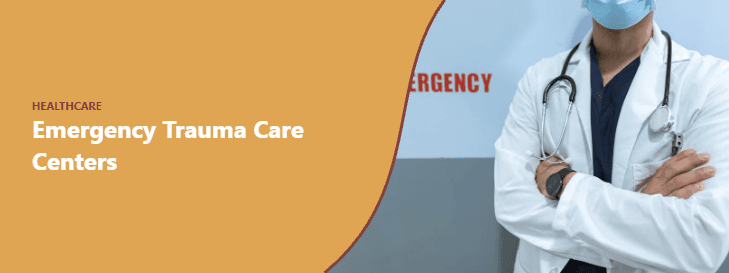

In the seconds after a road accident, what happens next, and where you are taken, can determine whether you make a full recovery or face permanent disability. According to the World Health Organizati-on, traumatic injuries cause nearly 5 million deaths and 45 million serious injuries every year worldwide. Trauma includes severe physical injuries caused by road accidents, falls, burns, sports injuries, violence, or industrial incidents. But not every hospital is equipped to handle these emergencies at the same level. An emergency trauma care center is specifically designed to provide rapid, specialized treatment when every minute matters.
What Exactly Is a Trauma Center And How Is It Different from a Regular ER?
A trauma center is a hospital specifically designed to manage severe, life-threatening, and multi-system injuries. These facilities are built for emergencies where rapid intervention can save a patient’s life, prevent disability, and reduce complications after major accidents or injuries.
Unlike a standard emergency room, trauma centers maintain dedicated trauma teams and specialized infrastructure that remain ready 24/7.
| Regular Emergency Room (ER) | Trauma Center |
|---|---|
| Treats a wide range of emergencies | Specializes in severe traumatic injuries |
| Handles minor fractures, infections, asthma, cardiac events | Handles major bleeding, head trauma, spinal injuries, crush injuries |
| Specialists may not always be immediately available | Trauma surgeons and specialists available 24/7 |
| Focuses on stabilization and general emergency care | Built for rapid trauma surgery and critical care |
| May transfer complex trauma cases elsewhere | Designed to receive and manage high-acuity trauma patients |
What Makes a Trauma Center Different?
Trauma centers maintain continuous readiness with:
- Dedicated trauma surgeons
- Neurosurgeons and orthopedic specialists
- Critical care nurses and anesthesiologists
- Emergency operating rooms
- Advanced imaging and blood bank support
- Coordinated trauma response teams
Not all trauma centers provide the same level of care. To ensure patients receive treatment matched to the severity of their injuries, trauma systems classify hospitals into different levels based on staffing, surgical capability, specialist availability, and transfer capacity.
The Levels of Trauma Centers Explained (Level I to Level IV)
Understanding these trauma levels helps explain why certain patients are transferred between hospitals after a major accident or injury. The system is designed to ensure critically injured patients reach the right facility as quickly as possible.
Here’s how each trauma center level differs:
Level I Trauma Center
The highest level of trauma care, designed for the most complex and severe injuries. Key capabilities include:
- 24/7 in-house trauma surgeons and specialists
- Advanced neurosurgical and orthopedic care
- Trauma research and surgical residency programs
- Complete care from emergency resuscitation to rehabilitation
- Regional referral center for high-acuity trauma cases
Level II Trauma Center
Level II centers provide comprehensive trauma treatment but may not have the academic and research responsibilities required of Level I centers. These centers typically offer:
- Full trauma evaluation and emergency surgery
- Continuous specialist availability
- High-level trauma stabilization and intensive care
- Primary trauma services in urban and suburban communities
Level III Trauma Center
These are commonly community-based hospitals that focus on early stabilization and emergency assessment. Their primary role includes:
- Managing moderate trauma injuries
- Providing emergency resuscitation
- Rapidly transferring critical patients to Level I or II centers
- Supporting trauma care access in semi-urban and rural areas
Level IV Trauma Center
Level IV centers are often located in remote or rural regions where advanced trauma facilities may be far away. They mainly provide:
- Initial emergency evaluation
- Life-saving stabilization measures
- Basic trauma support and transfer coordination
- Preparation for transport to higher-level centers
Pediatric Trauma Centers
Children with severe injuries often require specialized trauma systems separate from adult care pathways. Pediatric trauma centers include:
- Staff trained specifically in pediatric emergency care
- Child-sized surgical and critical care equipment
- Pediatric-specific injury assessment protocols
- Dedicated Level I and II pediatric trauma designations
Choosing a trauma center is not only about proximity, it is also about whether the hospital consistently meets recognized standards for emergency and critical injury care.
What Makes a Trauma Center Accredited and Trustworthy?
Trauma accreditation is a rigorous, performance-based verification process that evaluates whether a hospital can safely manage severe injuries around the clock. It is not a marketing label or optional certification. Accredited trauma centers must continuously demonstrate clinical readiness, specialist availability, and measurable patient outcomes.
To remain verified and trustworthy, trauma centers are typically required to have:
- 24/7 trauma team and surgical specialist availability
- Emergency operating rooms and critical care infrastructure
- Minimum annual trauma patient volume requirements
- Performance improvement and peer-review programs
- Trauma registry data collection and reporting
- Clear transfer protocols to higher-level trauma centers
- Continuous staff training and emergency preparedness systems
Among hospitals in Kerala that have built a structured emergency and trauma response, Meitra Hospital in Calicut (Kozhikode) is one example of a quaternary care facility where the emergency and trauma department operates 24x7 with a multi-disciplinary team covering trauma surgery, neurosurgery, orthopedics, and critical care.
The department operates with an ED observation unit supported by on-site advanced imaging (X-Ray, MRI, CT, Ultrasound) and routes incoming patients through a structured triage system - categorizing them as requiring immediate, intermediate, or minor care. The facility holds NABH and JCI accreditation. This kind of integrated model - where the trauma department is backed by specialized centers of excellence rather than operating as a standalone unit - represents a direction that trauma care delivery in India is increasingly moving toward.
Knowing where to seek treatment after an injury can save critical time and prevent complications. The right facility depends on the severity of the injury, symptoms, and risk of internal damage.


Trauma Care vs. Urgent Care vs. Emergency Room: Which One Do You Need?
If the injury involves severe bleeding, head trauma, breathing difficulty, loss of consciousness, or suspected spinal injury, emergency trauma care is essential. For suspected spinal injuries, avoid moving the patient and call emergency services immediately, as improper movement can cause permanent paralysis.
Here's a quick decision guide:
| Situation | Where to Go |
|---|---|
| Car accident, fall from height, gunshot injury | Emergency Trauma Center |
| Fracture, deep cut, suspected head injury | Hospital Emergency Room |
| Sprain, small cut, mild burn | Urgent Care Center |
| Non-emergency illness or routine concern | Outpatient Clinic / GP |
Knowing the nearest well-equipped trauma facility before an emergency happens can make a meaningful difference in treatment timelines and recovery outcomes.
Emergency Trauma Care at Meitra Hospital: What to Expect If You Are in North Kerala
For residents and travellers across North Kerala, one facility that aligns with many of the trauma care benchmarks discussed above is Meitra Hospital in Calicut.
The hospital’s Emergency and Trauma department operates 24x7 with integrated in-house emergency support teams, including:
- Trauma surgeons
- Neurosurgeons
- Orthopedic specialists
- Dedicated stroke response team
- Coronary care team
Patients are triaged immediately on arrival into critical, intermediate, or minor care pathways based on injury severity rather than arrival order. This protocol-driven approach helps reduce delays during time-sensitive emergencies.
The emergency department is also directly supported by on-floor diagnostic imaging facilities such as:
- CT scans
- MRI
- X-Ray
- Bedside Ultrasound
This minimizes the need to move critically injured patients between departments during initial stabilization.
For patients requiring prolonged monitoring or surgical recovery, the hospital’s 52 individual ICU units support complex post-trauma critical care. The hospital also holds both NABH and JCI accreditation standards for healthcare quality and patient safety.
To know more about Meitra’s emergency and trauma services or how to reach the facility during an emergency, visit Meitra Emergency and Trauma center or talk to us on Whatsapp.
Conclusion
Trauma may be unpredictable, but the quality of emergency response should not be. Understanding how trauma centers work, from trauma levels to specialist availability, can help patients and families make faster, more informed decisions during critical moments. The right trauma system can significantly improve survival and recovery outcomes. As advanced trauma care continues to expand across India, timely access to the right facility remains the most important factor in saving lives.
Need advanced emergency and trauma care support in Kerala? Meitra Hospital offers 24x7 emergency services with multidisciplinary critical care and advanced diagnostic support. Get Emergency Care Support at Meitra Hospital