
The burden is even greater among women and urban populations, highlighting the growing need for timely diagnosis, specialised treatment, and access to experienced cardiac experts.
Yet when patients are told they may need a bypass surgery, valve replacement, aortic procedure, or another complex heart operation, the next question is often the most important one: who should perform the surgery? The outcome of advanced cardiac procedures depends not only on technology and hospital infrastructure, but also on the experience, judgement, and surgical expertise of the treating cardiovascular surgeon.
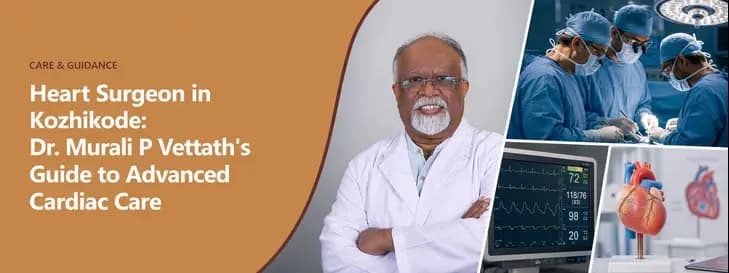
For many years, patients from North Kerala frequently travelled to major metropolitan centres such as Chennai, Bengaluru, Mumbai, or Delhi in search of highly specialised cardiac care. Today, that landscape has changed significantly. At Meitra Hospital, Kozhikode, Dr. Murali P. Vettath has helped establish one of the region's most advanced cardiovascular and thoracic surgery programmes, bringing internationally recognised expertise closer to patients and families across Kerala.
This article is an honest, information-first guide to help patients, caregivers, and referring doctors understand what truly advanced cardiac care looks like what questions to ask, what procedures exist, and what sets a world-class surgeon apart from an ordinary one.
Who Is Dr. Murali P Vettath? A Surgeon Who Changed the Standard
Dr. Murali P Vettath holds the position of Chair & Senior Consultant, Cardiovascular and Thoracic Surgery (CVTS) at Meitra Hospital, Kozhikode. His credentials span MBBS, MCh, DNB, MNAMS, FIACS, and FRCS, a combination that represents decades of rigorous academic and clinical training.
But credentials alone do not tell the full story. What makes Dr. Murali genuinely distinct is one number that no other cardiac surgeon in India can match: he has performed 100% of his coronary surgeries on a beating heart, without ever relying on a heart-lung machine.
Key details about Dr. Murali P Vettath:
- Total open-heart surgeries performed: 7,000+
- OPCAB (Off-Pump Coronary Artery Bypass): 4,500+
- Mortality rate: < 0.5%
- Conversion to pump (last 3,500 OPCAB): Only 1
- Minimally Invasive Cardiac Surgeries (MICS): Pioneer in Kerala
To put the "less than 0.5% mortality" figure in context: the global average mortality for CABG (Coronary Artery Bypass Grafting) surgery is typically cited between 1% and 3%, depending on patient risk profile. Dr. Murali's outcomes are not just good, they are exceptional by any international benchmark.
Qualifications & Recognitions
- MBBS, MCh (Cardiothoracic Surgery)
- DNB (Diplomate of National Board)
- MNAMS (Member, National Academy of Medical Sciences, India)
- FIACS (Fellow, Indian Association of Cardiovascular Surgeons)
- FRCS (Fellow, Royal College of Surgeons)
- Has trained cardiac surgeons and anaesthesiologists globally in OPCAB techniques
Among the many factors that distinguish Dr. Murali's practice, his exceptional expertise in beating-heart surgery (OPCAB) stands out as a defining advantage for patients requiring coronary bypass procedures.
Beating Heart Surgery (OPCAB): What It Is and Why It Matters
Most patients researching heart surgery in India encounter the term "bypass surgery" or "CABG." What fewer people know is that CABG can be performed two ways: on-pump (with a heart-lung machine that stops the heart) or off-pump, where the surgeon operates on a still-beating heart. The latter is called OPCAB, Off-Pump Coronary Artery Bypass.
Why OPCAB Is Often Safer for the Right Patients
- Avoids the inflammatory response triggered by cardiopulmonary bypass (the heart-lung machine)
- Reduces the risk of stroke, kidney damage, and cognitive decline post-surgery
- Shorter ICU stays and faster overall recovery in experienced hands
- Particularly beneficial for elderly patients and those with co-morbidities like diabetes and kidney disease
Dr. Murali has not just performed OPCAB, he has mastered it to a degree that only a handful of surgeons worldwide can claim. With over 4,500 OPCAB cases and just one conversion to pump in the last 3,500 surgeries, his technical proficiency in this discipline is in a category of its own in South Asia.
If coronary bypass surgery has been recommended, a consultation with Dr. Murali can help you explore the safest and most effective surgical strategy for your individual risk profile.
While OPCAB demonstrates technical mastery in coronary surgery, Dr. Murali's work in minimally invasive cardiac surgery reflects his broader vision of delivering safer, less disruptive treatment options for suitable patients.
Minimally Invasive Cardiac Surgery (MICS): Kerala's First
In conventional open-heart surgery, the sternum (breastbone) is cut open. Recovery takes months. Scars are significant. For younger patients, working professionals, and those with specific anatomical considerations, this remains a source of major concern.
Dr. Murali performed the first MICS in Kerala, specifically using the Right Anterior Mini Thoracotomy technique for Atrial Septal Defect (ASD) closure. Since then, he has extended MICS to Mitral and Aortic Valve surgeries. The procedure involves a small incision between the ribs, leaving the sternum completely intact.
Key Benefits of MICS for Appropriate Candidates
- Smaller incision: no sternum cut, just a 5–7 cm keyhole between the ribs
- Faster recovery: return to daily activities in weeks, not months
- Less blood loss: significantly lower transfusion requirements
- Better cosmesis: nearly invisible scars, important for younger patients
- Lower infection risk: sternum wounds are a major post-surgical complication avoided entirely
Not all patients qualify for MICS. The selection depends on anatomy, the nature of the valve lesion, prior surgeries, and other clinical factors. A thorough pre-operative evaluation at Meitra ensures that every patient receives the approach most suited to their specific condition, not a one-size-fits-all protocol.
Cardiac Procedures Available at Meitra Hospital, Kozhikode
The Centre for Heart & Vascular Care at Meitra Hospital is one of the most comprehensively equipped cardiac centres in Kerala. Below is an overview of the procedures Dr. Murali and the CVTS team perform:
1. Surgical Procedures
- CABG (Coronary Artery Bypass Grafting): Both on-pump and off-pump (OPCAB); Dr. Murali specialises exclusively in the beating-heart approach
- Minimally Invasive Cardiac Surgery (MICS): For valve repairs/replacements and congenital defect closures
- Heart Valve Surgery: Repair and replacement of mitral and aortic valves
- ASD/VSD Closure: Including via MICS (Right Anterior Mini Thoracotomy)
- Heart Transplantation: Full heart transplant programme at Meitra
- LVAD (Left Ventricular Assist Device): For advanced heart failure bridging to transplant or as destination therapy
- Redo Cardiac Surgery: Complex re-operations for patients who have previously undergone cardiac procedures
- Aortic Surgery: Repair of aneurysms and dissections.
2. Interventional & Structural Heart Procedures
- TAVR (Transcatheter Aortic Valve Replacement): Meitra hosts a dedicated TAVI Centre, non-surgical valve replacement for high-risk patients
- Angioplasty and Stenting: Percutaneous coronary interventions
- Angiography: Diagnostic coronary imaging
- ECMO Services: Extracorporeal membrane oxygenation for critical cardiac/respiratory failure.


How to Choose the Right Heart Surgeon: Questions Every Patient Should Ask?
Not all cardiac surgery programmes are equal. Here are the critical questions patients and families should ask, regardless of which hospital or surgeon they are considering:
- How many of this specific procedure have you performed personally? Volume matters. A surgeon who has done 50 CABGs is not comparable to one who has done 4,500.
- What is your personal mortality rate for this procedure? Not the hospital's overall rate, the surgeon's individual outcome data.
- Do you perform OPCAB or on-pump CABG? Both are valid; but for lower-risk patients, OPCAB in experienced hands generally offers faster recovery.
- Am I a candidate for minimally invasive surgery? Always worth asking, particularly for valve conditions or ASD closures.
- Who will be my primary surgeon on the day? In high-volume centres, trainees sometimes operate. Confirm who is holding the scalpel.
- What does post-operative rehabilitation look like? Cardiac rehab is a critical but often under-discussed component of recovery.
Dr. Murali's team at Meitra encourages patients to ask precisely these kinds of questions. The answers speak for themselves.
Understanding Common Conditions That Require Cardiac Surgery
Not every cardiac condition requires surgery, but when surgery becomes necessary, understanding the underlying diagnosis helps patients make informed decisions about treatment. The following are some of the most common conditions for which patients may be referred to a cardiac surgeon:
1. Coronary Artery Disease (CAD)
The most common reason for CABG surgery. When arteries supplying blood to the heart muscle become blocked or severely narrowed by plaque, bypass grafting creates new pathways. Symptoms include chest pain (angina), shortness of breath, and in severe cases, heart attack.
2. Valvular Heart Disease
The heart has four valves, mitral, aortic, tricuspid, and pulmonary. Stenosis (narrowing) or regurgitation (leaking) in any of these can lead to heart failure if untreated. Both surgical repair and replacement (mechanical or biological valve) are options, with MICS available for eligible patients at Meitra.
3. Congenital Heart Defects
Atrial Septal Defects (ASD) and Ventricular Septal Defects (VSD) are holes between the chambers of the heart. When detected in adults, they often require surgical or catheter-based closure. Dr. Murali performed Kerala's first MICS-based ASD closure.
4. Heart Failure and LVAD
For patients with advanced heart failure who are not immediate transplant candidates, Left Ventricular Assist Devices (LVADs) can extend and significantly improve quality of life. Meitra's CVTS team has the capability and experience to implant and manage LVADs.
Even the most skilled surgeon depends on the strength of the ecosystem around them. Complex cardiac procedures require not only surgical expertise but also advanced infrastructure, multidisciplinary support, and good post-operative care.
Why Patients Choose Meitra Hospital for Cardiac Care?
Choosing a cardiac centre is about more than finding an experienced surgeon. Patients should evaluate the entire system that supports diagnosis, surgery, intensive care, rehabilitation, and long-term follow-up.
At Meitra Hospital, this integrated approach is supported by specialised cardiac infrastructure, advanced technologies, and dedicated programmes designed to meet the needs of both domestic and international patients.
Some of the key factors that contribute to Meitra's reputation as a leading destination for cardiac care include:
Meitra's Cardiac Infrastructure: What Exists on the Ground
- Dedicated Centre for Heart & Vascular Care: A centre of excellence model, meaning cardiac care here is not a department, it is the central focus with dedicated cath labs, cardiac ICUs, and operating theatres.
- Meitra United Heart Centre, Kasaragod: A second cardiac facility extending access to patients in northern Kerala and southern Karnataka.
- Dedicated TAVI Centre: One of very few hospitals in Kerala with a dedicated Transcatheter Aortic Valve Implantation centre, for non-surgical valve replacement in high-risk or inoperable patients.
- NABH Accreditation: National Accreditation Board for Hospitals & Healthcare Providers, the gold standard of quality in Indian healthcare.
- ECMO Programme: Extended critical care capability, including ECMO, which is only available at a limited number of hospitals across India.
- Centre for Organ Transplantation: Full transplant capability, with Dr. Murali as a central figure in the heart transplant programme.
For International Patients: The Meitra Advantage
Kerala's geographical position with international airports at Kozhikode (Calicut International Airport, CCJ) and Kochi makes it one of the most accessible medical travel destinations in India for patients from the UAE, Gulf Co-operation Council (GCC) countries, Maldives, and East Africa.
Meitra Hospital has a structured International Patient programme that covers:
- Pre-arrival consultation: Video consultations with Dr. Murali's team before travel, including review of prior investigations
- Visa facilitation: Medical visa support documentation
- Language support: Arabic-language assistance for Gulf patients
- Cost transparency: Itemised treatment estimates before commitment, no hidden charges
- Post-treatment follow-up: Telemedicine follow-up protocols so patients can recover at home without sacrificing continuity of care.
Conclusion
Heart disease does not announce itself with convenient timing. The decisions that matter which surgeon to trust, which hospital to choose, whether to travel to a metro city or stay close to home are made under pressure, often with incomplete information.
What this guide has tried to do is give you the information that helps those decisions. Dr. Murali P Vettath's record 7,000+ surgeries, a sub-0.5% mortality rate, Kerala's first MICS, and a 100% beating-heart approach to coronary surgery is not marketing copy. These are verifiable clinical outcomes that have been maintained consistently over a career spanning decades.
Meitra Hospital has built a cardiac programme around this expertise: NABH-accredited, internationally accessible, equipped for everything from routine angioplasty to heart transplantation, and structured to serve patients with dignity regardless of whether they are travelling from Wayanad or from Kuwait.
If you or a family member is facing a cardiac diagnosis, the next step is a consultation not a commitment. Dr. Murali's team offers second opinions on existing diagnoses, pre-surgical evaluations, and teleconsultations for patients who are not yet able to travel.
Book an appointment with Dr. Murali P Vettath today!
Medical Disclaimer The information in this article is intended for general educational purposes only and does not constitute medical advice. It should not be used as a substitute for professional medical consultation, diagnosis, or treatment. All clinical decisions including the choice of surgical approach, hospital, and surgeon should be made in direct consultation with a qualified medical professional after a thorough evaluation of the individual patient's condition. Meitra Hospital and Dr. Murali P Vettath's team are available for consultations; please contact the hospital directly for personalised medical guidance.